
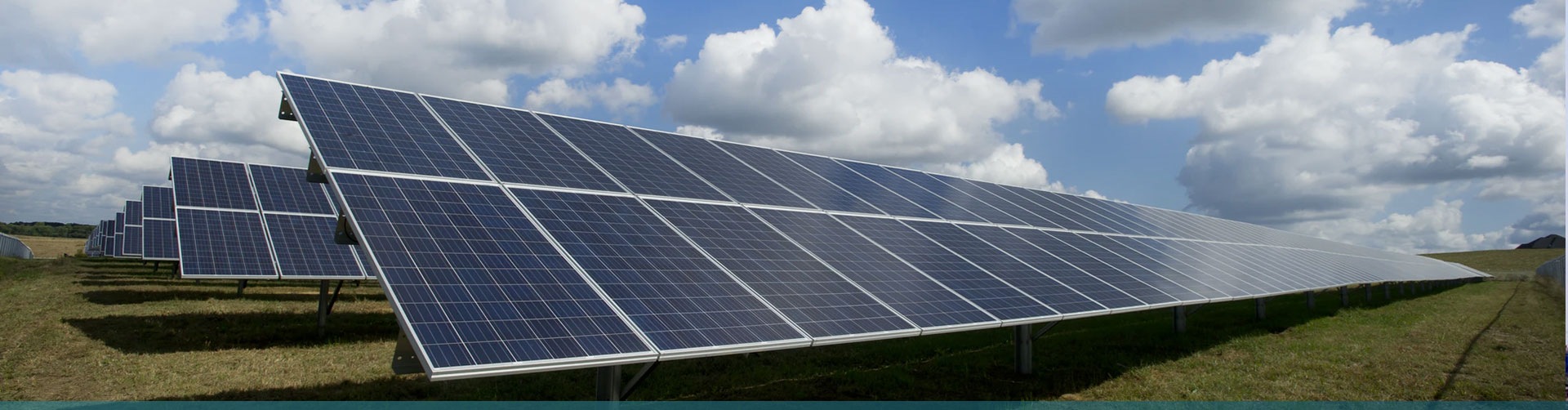
The “Invisible Battlefield” Behind Solar Power’s Rise to the Top: How Cleaning Robots Safeguard Every Kilowatt-Hour of Green Electricity
From “Manual Climbing” to “Intelligent Autonomy,” Photovoltaic O&M Ushers in a Dual Inflection Point of Standardization and Intelligence
In September 2026, China’s energy history reached a milestone moment. According to data from the National Energy Administration, as of the end of July, the country’s installed photovoltaic power generation capacity reached 1.286 billion kilowatts, surpassing coal power for the first time and becoming China’s largest installed power source. In the first seven months of this year, national photovoltaic power generation exceeded 802.4 billion kilowatt-hours, meaning that more than 1 out of every 8 kilowatt-hours of electricity consumed in society came from solar power.
As solar panels spread across deserts, gobi, factory rooftops, and water surfaces, a once-neglected problem has surfaced: dust accumulation. Research shows that dust buildup consumes 4% to 7% of global photovoltaic power generation annually. At desert power stations in Northwest China, a single sandstorm can cause module transmittance to plummet, resulting in staggering power generation losses. Traditional manual cleaning methods are not only inefficient and costly but also carry safety hazards such as falls from height and electric shock.
From “Standard Vacuum” to “Three Standards in One”: Cleaning Robots Bid Farewell to Unregulated Growth
For a long time, the photovoltaic cleaning robot industry lacked unified technical thresholds. Low-priced, inferior equipment flooded the market, and some products even scratched the anti-reflective coating of modules during cleaning due to improper brush bristle hardness, causing irreversible power generation losses.
This situation reached a fundamental turning point in 2026. With the official implementation of the Ministry of Industry and Information Technology’s electronics industry standard “General Technical Specification for Photovoltaic Module Cleaning Robots” on July 1, the industry formed a triple regulatory closed loop of “national standard — dry cleaning special standard — electronics industry standard.”
“The closure of the standard system means that power station owners now have hard entry thresholds when purchasing.” Industry insiders pointed out that small brands lacking R&D capabilities and disrupting the market with low prices are accelerating their exit, while enterprises with core technologies and compliance capabilities are welcoming substantial benefits.
Divergent Technical Routes: Competition Among Dry Cleaning, Rail-Guided, and AI Vision
Currently, photovoltaic cleaning robots have derived multiple technical paths to adapt to the needs of different power station scenarios.
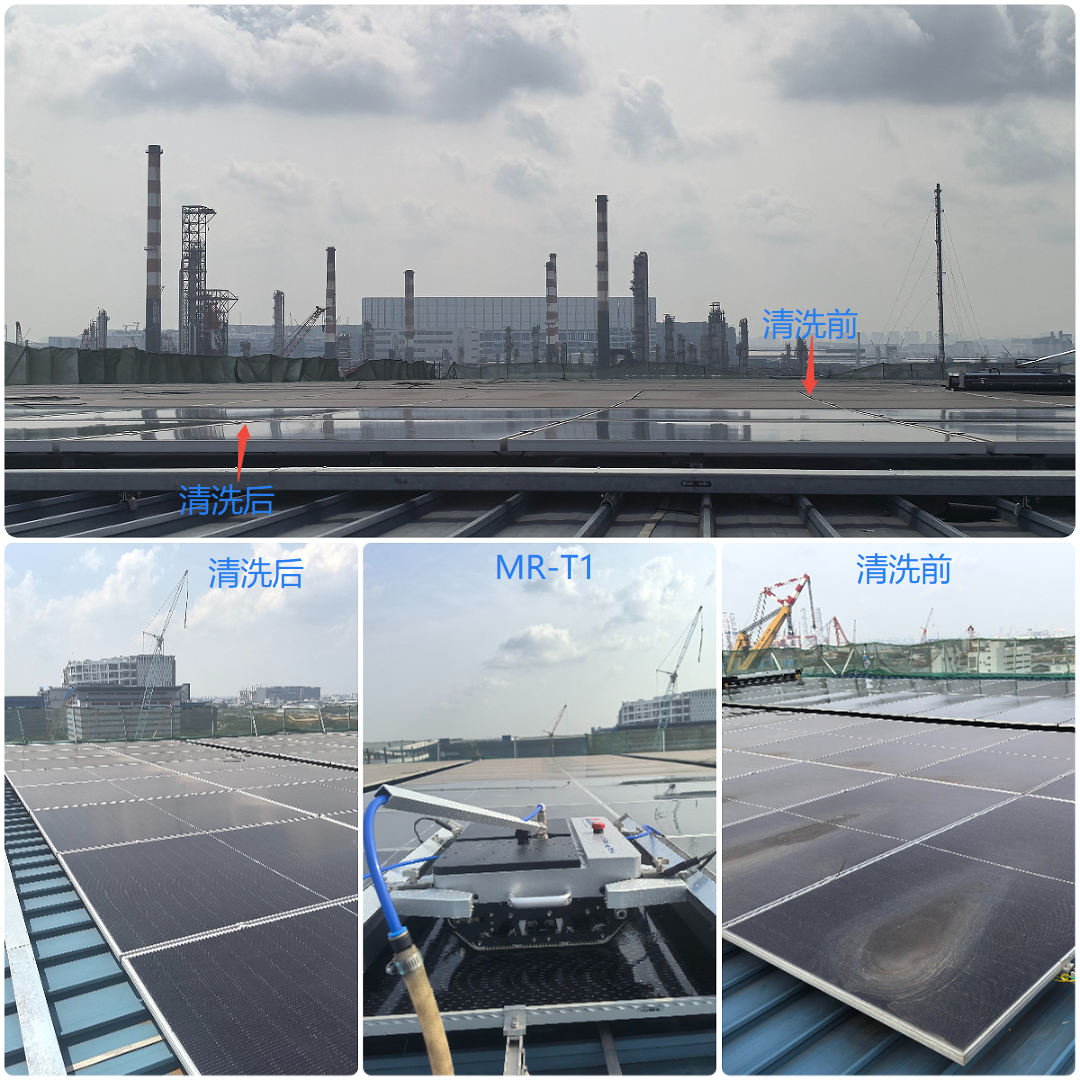
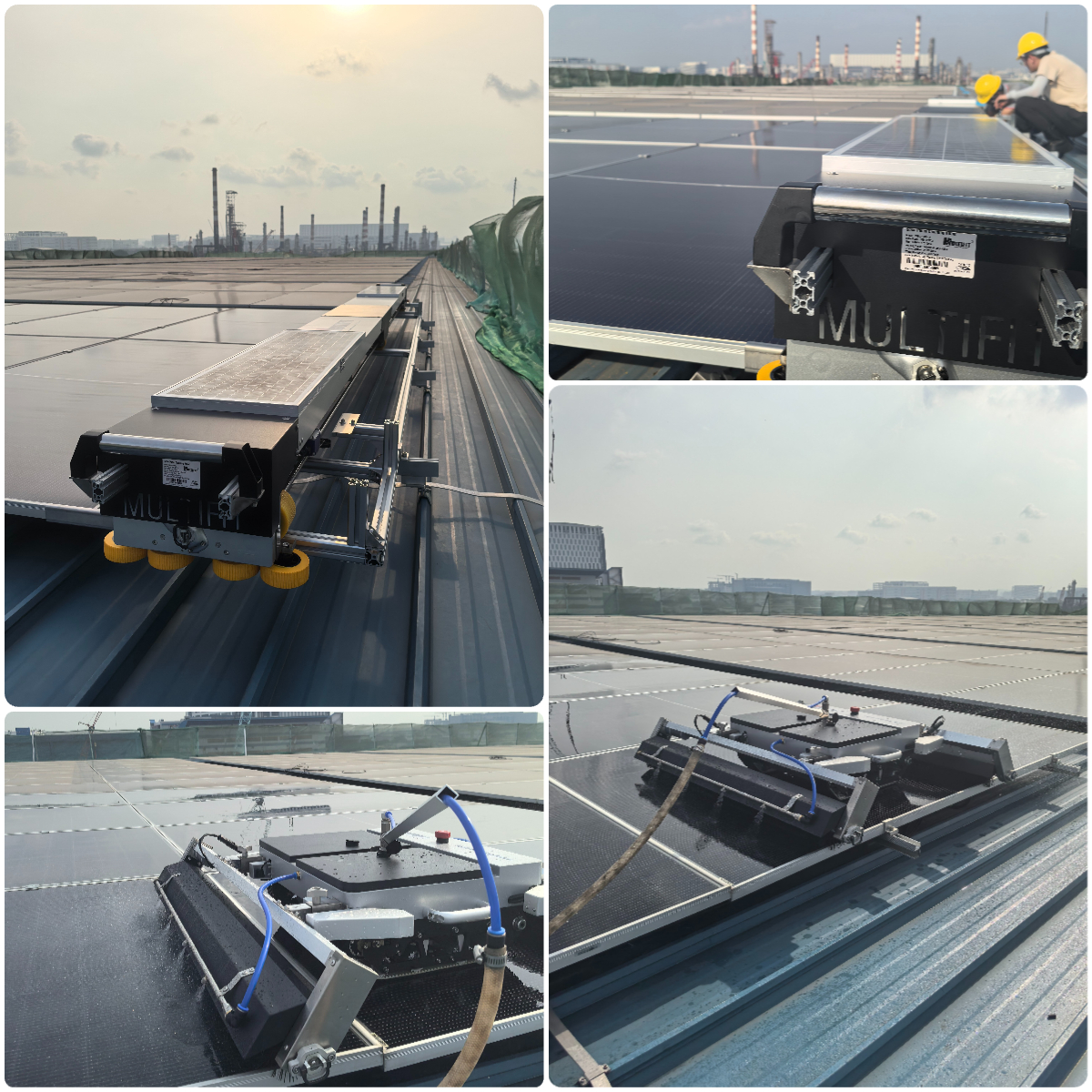
- Centralized ground-mounted power stations: Rail-guided robots automatically operate along pre-installed tracks, covering 3 kilometers on a single charge with cleaning efficiency as high as 99%.
- Distributed commercial and industrial rooftops: Lightweight portable robots (approx. 33kg) utilize laser optical flow and AI vision to achieve millimeter-level positioning.
- Water utility scenarios: Fourth-generation flexible robots use AI visual navigation to adapt to panel swaying, potentially improving power generation efficiency by 8% to 25%.
The Benefit Ledger: From “Cost Item” to “Revenue Engine”
For power station operators, cleaning robots are transforming from pure O&M expenditure into quantifiable revenue growth points. Standardized robot cleaning avoids module micro-cracks caused by manual trampling, and flexible brush bristle design protects the glass coating while efficiently removing dust, extending the module service life.
Global Race: Chinese Intelligent Manufacturing Heads to Middle Eastern Deserts
The Middle East, with intense sunlight, frequent sandstorms, and extremely scarce water resources, has strong demand for “waterless dry cleaning” robots. Market research institutions predict that the global intelligent photovoltaic cleaning robot market will reach 1.92 billion USD by 2032, with a compound annual growth rate exceeding 13%.
Future Vision: The Next Stop for Cleaning Robots
Technological evolution is far from stopping. Current leading products are no longer just “cleaning tools” but comprehensive O&M platforms integrating detection and inspection functions. Some models are equipped with infrared thermal imaging sensors, synchronously identifying anomalies such as hot spots and micro-cracks during cleaning.
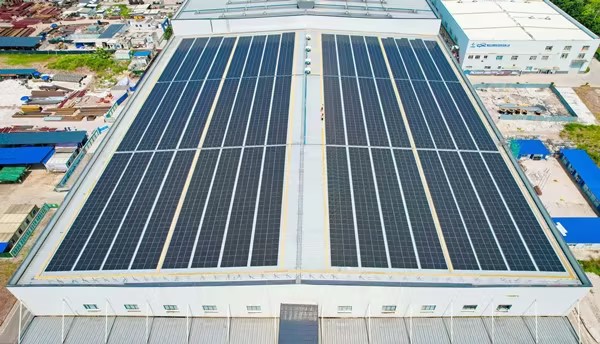
As photovoltaics become China’s largest power source, the strategic value of this niche track of cleaning robots is being redefined. In this wave of intelligent O&M, Multifit Solar Company is a practitioner worthy of attention.
Post time: Sep-17-2026