
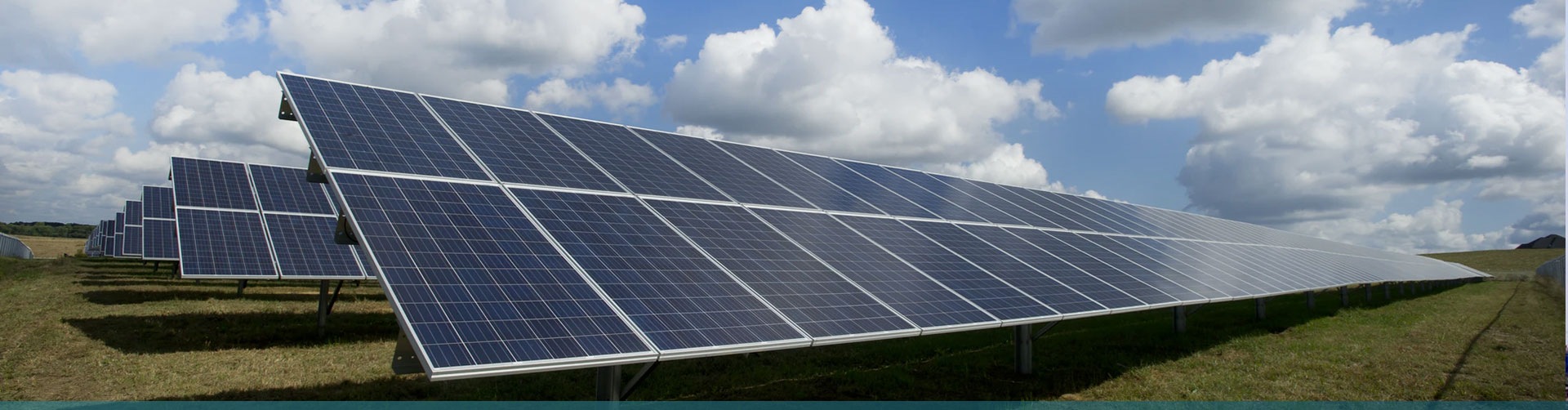
With the deepening implementation of the “dual carbon” goals, photovoltaic (PV) power stations have become the main force in the energy transition. However, many owners and businesses face a vexing problem six months to a year after installing their PV systems: the equipment is clearly not damaged, so why has power generation plummeted?
The core reason is not component quality, but “dirt.”
Industry operational data shows that over 30% of power generation losses in the vast majority of PV power stations are caused by inadequate cleaning. Dust, bird droppings, and fallen leaves not only block sunlight but also trigger the hot spot effect, accelerating component aging and even posing safety hazards. Addressing this common operation and maintenance pain point, Beijing Multifit Electrical Technology Co., Ltd., a leading domestic provider of solar system solutions, has proposed a “full life cycle” efficiency improvement plan based on its self-developed intelligent cleaning equipment matrix.
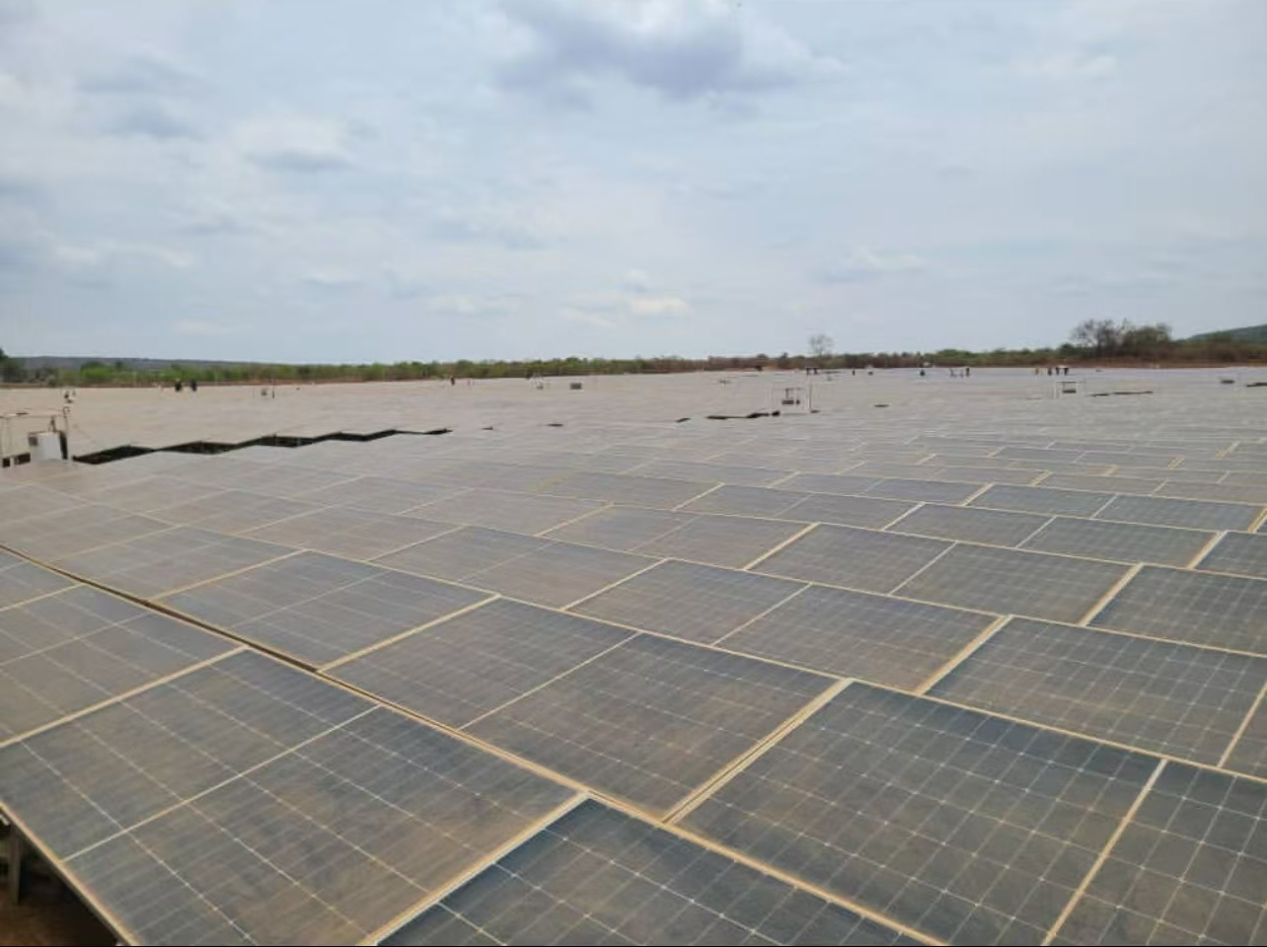
Dust and Bird Droppings: The Overlooked “Power Generation Thieves”
Many users believe that rainwater naturally cleans solar panels or underestimate the impact of surface dust accumulation. In fact, long-term lack of cleaning leads to four major negative consequences:
Direct Shading Reduces Light Transmission
Forms a blocking film, reducing the light-receiving area of the cells.
Significant Hot Spot Hazard
Bird droppings and stubborn stains cause localized temperature spikes, reducing power generation and posing a fire risk.
Permanent Damage
Dust absorbs moisture and forms scale, corroding the anti-reflective coating, causing irreversible power generation loss.
The “Bucket Effect”
Uneven dust accumulation at the edges leads to current mismatches across the entire string, pulling down the efficiency of the whole system.
Scientific Operation and Maintenance: When to Clean? How to Clean?
The industry-recognized scientific cleaning cycle depends on local conditions:
| Location Type | Recommended Cleaning Frequency |
|---|---|
| Urban Residential Areas | Once every 3–4 months |
| Rural Areas, Roadsides, Heavy Wind & Dust | Once every 2 months |
| Areas with Many Trees, Birds & Fallen Leaves | Cleaning in both spring and autumn |
The best cleaning time is early morning or evening. At these times, the panel surface temperature is low, avoiding hidden cracks caused by thermal shock from cold water, and dew softens stains, achieving the best cleaning results.
However, traditional manual cleaning has drawbacks such as low efficiency, the danger of working at heights, and the risk of damaging components (e.g., the strict prohibition of using steel wool or strong acids/alkalis). Addressing different application scenarios, Beijing Multifit Electrical Technology Co., Ltd. has introduced differentiated and efficient solutions.
Beijing Multifit Electrical Technology Co., Ltd.: Ushering PV Cleaning into the “Robot Era”
As a high-tech enterprise deeply involved in the PV cleaning and solar system field for many years, Multifit not only provides efficient photovoltaic products but also focuses on solving post-market operation and maintenance challenges for power stations.
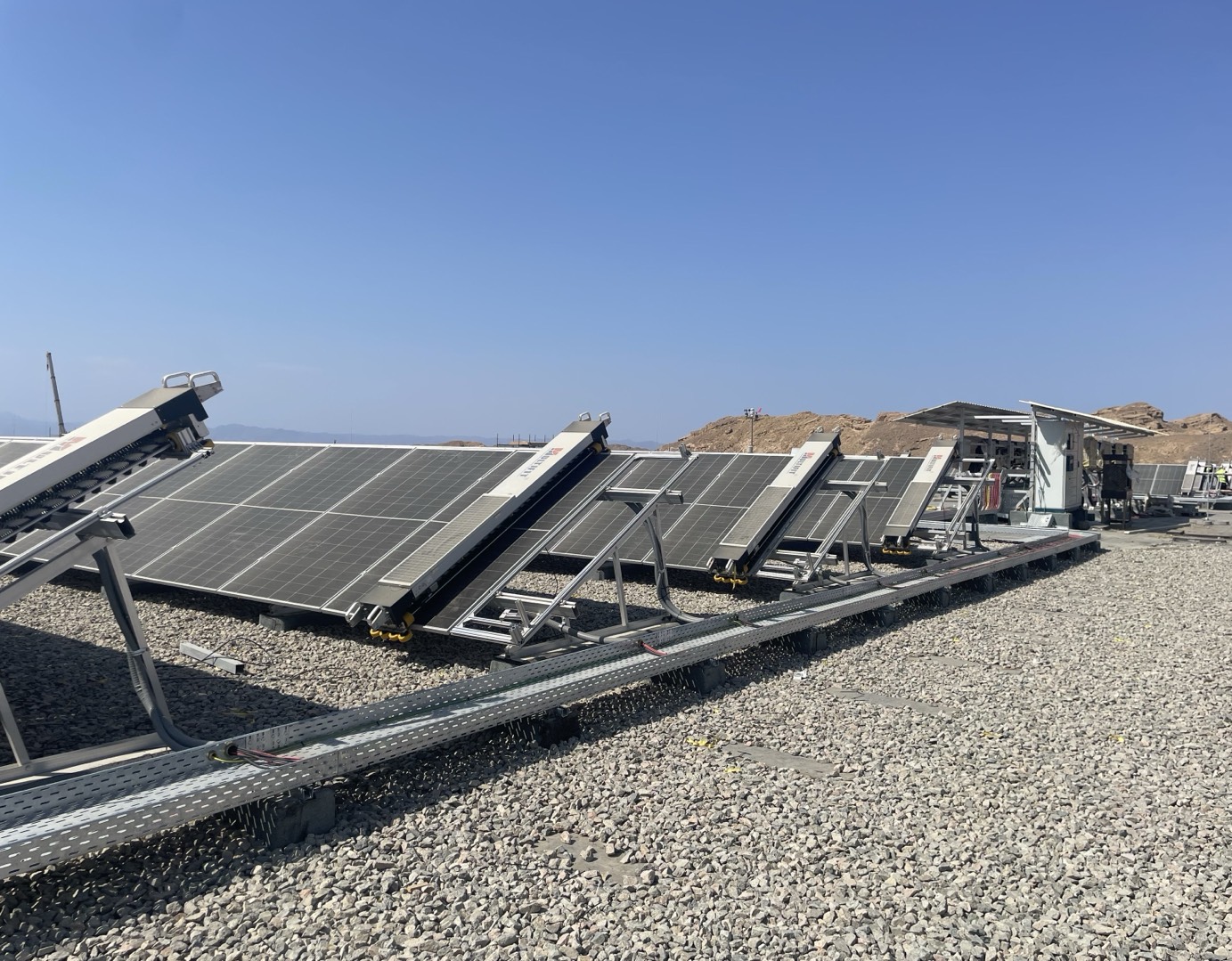
1 Fully Automatic Intelligent Robot: The “Worry-Free Steward” for Large Power Stations
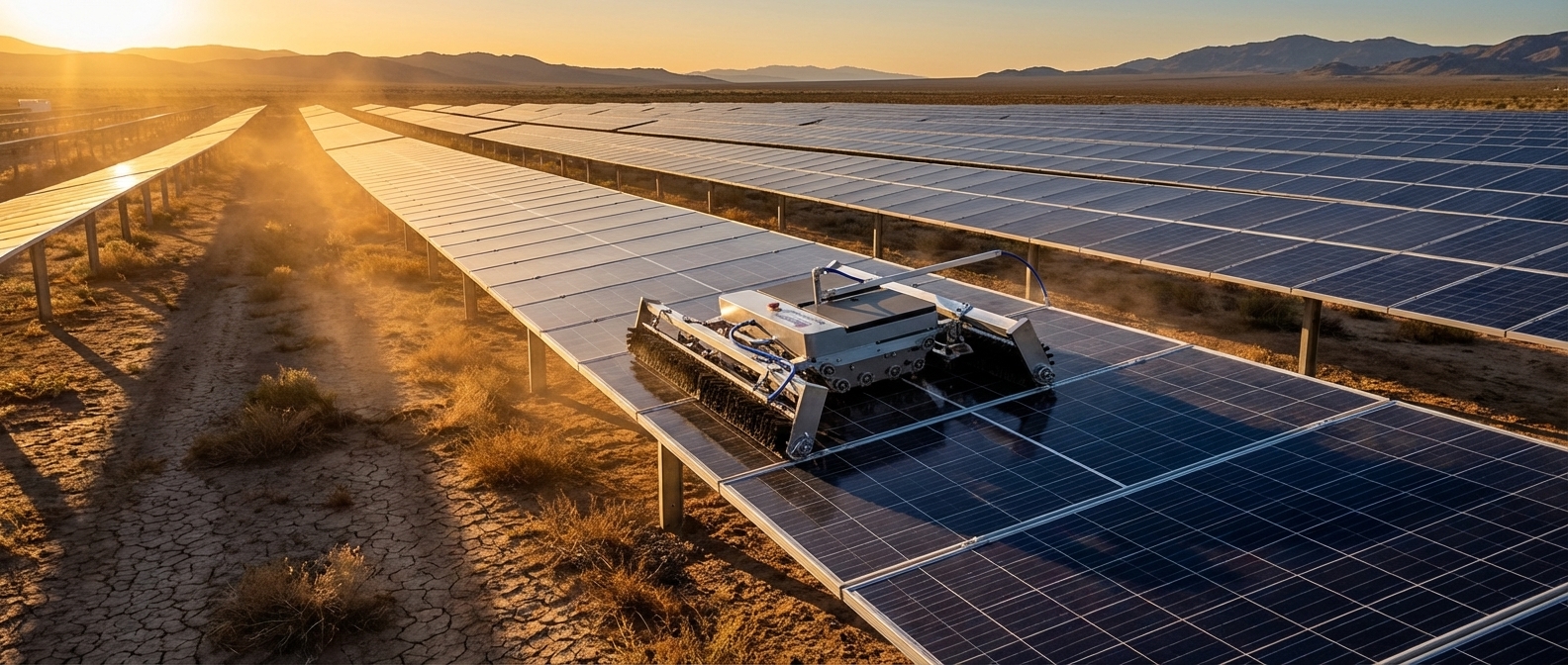
For flat roofs and large ground-mounted power stations, Multifit‘s portable cleaning robots demonstrate strong technical advantages:
High Efficiency & Labor Saving
Movement speed of 15–25 meters per minute; supports group control of multiple machines.
Ultimate Safety
Lightweight modular design; IP65 protection rating; operates from -10°C to 50°C.
No Component Damage
Soft spiral polymer brush; water-free dry or minimal water modes — absolutely no scratching.
Technologically Advanced
Automatic path planning, anti-fall design, remote control and telemetry support.
2 Home & Commercial & Industrial (C&I): Lightweight Cleaning Solutions
For residential roofs or small to medium-sized distributed power stations, Multifit advocates for the physical cleaning method using “clean water + soft tools.” Using an extension pole with a specialized soft-bristled brush, gently cleaning from top to bottom, it neither damages the panels nor compromises personal safety, allowing ordinary owners to operate easily.
Pitfall Avoidance Guide: The “Five Taboos” of Cleaning
Technical experts at Multifit remind users that incorrect cleaning methods are more frightening than not cleaning at all:
Never use steel wool or hard brooms, as they will scratch the coating.
Detergents, washing powder, or strong acids/bases leave residue and scale, corroding the frame.
They can easily damage the frame sealant, leading to water ingress and aging.
This can easily cause hidden cracks and presents a risk of falling from heights.
Rainwater can only wash away light dust; bird droppings and oily stains require physical wiping.
Conclusion
The revenue from a PV power station is “generated,” not just “installed.” Regular cleaning, choosing the right time, and using the correct tools are the core principles for maintaining consistent annual power generation returns.
Relying on its leading PV cleaning robot technology, Beijing Multifit Electrical Technology Co., Ltd. frees users from tedious and dangerous cleaning labor. It uses technological means to combat dust degradation, ensuring that PV components perform at their best throughout their 25-year lifespan, maximizing power generation benefits.
About Beijing Multifit Electrical Technology Co., Ltd.
Beijing Multifit Electrical Technology Co., Ltd. is a high-tech new energy enterprise integrating R&D, production, and sales. Its headquarter locates in Beijing, factory in Shantou and branch in Shenzhen. It is dedicated to providing efficient, environmentally friendly solar system products and intelligent cleaning solutions. The company’s products are sold to over 50 countries worldwide and hold multiple international certifications including CE and ISO, making it a trustworthy partner for your PV power station operations and maintenance.
Post time: May-19-2026