
As the global energy transition deepens, the solar photovoltaic industry is undergoing a critical turning point from scale expansion to value reshaping. Recently, international top research institutions and companies have successively released multiple breakthrough achievements. At the same time, global market demand growth is slowing down, overcapacity and policy adjustments are intertwined, and the photovoltaic industry is facing a critical moment of deep reshuffling.
In terms of technological breakthroughs, the Fraunhofer Institute for Solar Energy Systems (Fraunhofer ISE) once again refreshed the world record for solar module efficiency. The research team optimized cell interconnection technology and adopted “shingle matrix technology” to increase the conversion efficiency of III-V germanium-based solar modules to 34.4%, breaking the 34.2% record set by the same team earlier in 2026.
The core of this breakthrough lies in a fundamental change to the traditional module structure. Researchers cut solar cells into narrow strips, arranged them in an overlapping “shingled” manner, and achieved direct connection between cells through conductive adhesives, completely replacing the traditional tinned copper ribbon interconnection method. Fraunhofer ISE pointed out that this design eliminates the shading of effective area by cell connectors, significantly improving the utilization rate of module area, which became the key factor for efficiency improvement.
The III-V triple-junction cells used in this module were provided by AZUR SPACE Solar Power, which adapted its triple-junction cell technology originally used for space applications for ground-based solar systems, achieving mass production on the same wafer specifications. This achievement demonstrates the feasibility of converting space-grade solar cell technology to ground applications, opening up new technological paths for future higher-efficiency and higher-performance photovoltaic products.
At the same time, Chinese companies are also showing no weakness in the efficiency race. JinkoSolar announced that its self-developed N-type TOPCon-perovskite tandem solar cell achieved an efficiency of 34.82%, certified by the Shanghai Institute of Microsystem and Information Technology, Chinese Academy of Sciences. This figure surpasses the company’s own record of 34.76% set in November 2025, demonstrating the continuous breakthrough capabilities of Chinese photovoltaic companies in next-generation cell technologies.
At the basic research level, the Ningbo Institute of Materials Technology and Engineering, Chinese Academy of Sciences, in collaboration with JinkoSolar and other institutions, made significant progress in the field of industrial TOPCon cells. The research team developed a bifacial electrical optimization strategy and achieved a conversion efficiency record of 26.66% on M10 wafers (effective area 313.3 cm²), with the results published in the journal Nature Energy. Through innovations such as front-side high sheet resistance emitter and optimized grid line design, as well as rear-side double-layer tunneling oxide/polysilicon structure, the research significantly improved the cell’s open-circuit voltage and fill factor, bringing the efficiency of industrial TOPCon cells to 83.8% of the theoretical limit.
In addition, a research team from the National University of Singapore produced ultra-thin bifacial TOPCon cells with a thickness of only 80 micrometers, achieving a conversion efficiency of 19.7%. This research provides new possibilities for application scenarios such as building-integrated photovoltaics (BIPV), indoor low-light energy harvesting, wearable devices, and solar drones.
In the field of perovskite/silicon tandem technology, US-based Tandem PV announced that its 100 cm² demonstration module achieved a conversion efficiency of 30.4% in internal testing and is currently in the third-party certification stage. The company’s CEO stated that this breakthrough paves the way for the launch of full-size modules with 28% efficiency later this year, targeting the utility-scale market.
In contrast to the efficiency breakthroughs in the laboratory, the photovoltaic market is facing the dual pressure of slowing demand growth and structural adjustment.
At the SNEC 2026 Shanghai exhibition, BloombergNEF (BNEF) Chief Solar Analyst Jenny Chase reiterated a relatively cautious judgment: global solar installations in 2026 may experience their first decline in nearly two decades. Data shows that China’s new photovoltaic installations in the first five months of 2026 declined by more than 60% year-on-year, a trend that has significantly impacted global market expectations. The China Photovoltaic Industry Association (CPIA) estimates that domestic new installations for the full year of 2026 will be between 180-240 GW.
The overcapacity problem remains severe. The operating rate of the polysilicon segment is less than 40%, and industry inventory is as high as 546,000 tons, accounting for about 43% of estimated demand in 2026. Analysts from CRU/Exawatt point out that the industry currently has production capacity in silicon ingots, wafers, cells, and modules that is approximately 2 to 3 times actual demand, but capacity clearance remains limited.
In terms of prices, TOPCon modules in recent central enterprise tenders have seen bids drop to 0.742-0.770 RMB/W, while polysilicon prices have long hovered at a low level of 34-35 RMB/kg, and the overall profit margins of the industry chain have been severely squeezed.
Facing overcapacity and low-price competition, China’s photovoltaic industry is reshaping the competitive landscape through technology grading and energy efficiency standards. In June 2026, the national standard “Energy Efficiency Limit Values and Energy Efficiency Grades for Crystalline Silicon Photovoltaic Modules and Inverters” was officially implemented. The standard sets clear conversion efficiency thresholds for the energy efficiency grades of TOPCon modules and BC modules, with the first-level energy efficiency requiring TOPCon modules to reach 24.0% and BC modules to reach 24.2%.
Downstream central enterprises have actively responded to this standard by setting up high-power bidding sections in module tenders, offering certain premiums for high-power products. This trend indicates that the photovoltaic industry is shifting from low-price competition to value competition based on technological advantages, and companies with leading technological advantages are expected to gain improvements in market share and profit margins.
At the policy level, China’s National Development and Reform Commission and the National Energy Administration jointly issued new regulations on renewable energy consumption, effective from August 1, 2026. The new regulations establish a dual assessment mechanism combining minimum consumption responsibility weight on the demand side and renewable energy consumption responsibility targets on the grid side, and for the first time include non-electric renewable energy utilization (such as green hydrogen, green ammonia, green methanol) in the policy framework.
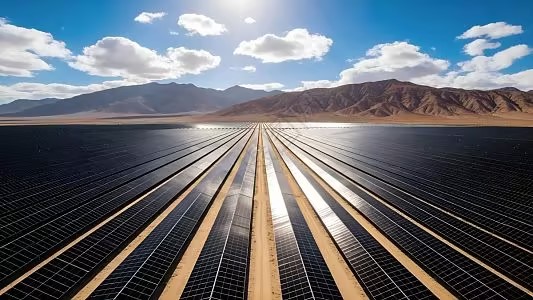
Against the backdrop of the industry seeking new growth points, solar-storage integration and emerging application scenarios are becoming key directions.
A notable feature of the SNEC 2026 exhibition was that the number of energy storage theme pavilions exceeded photovoltaic module theme pavilions for the first time, reflecting that energy storage is transitioning from an auxiliary role to a core industry focus. BNEF estimates that global new energy storage installations will reach 158 GW/459 GWh in 2026, an increase of 41% year-on-year.
The electricity demand from data centers and artificial intelligence (AI) is becoming a new area of imagination for the photovoltaic industry. InfoLink Consulting’s conservative estimate shows that data centers will drive approximately 85-100 GW of additional photovoltaic installation demand between 2025 and 2030. The integration of AI technology with energy systems has also become a new trend, with many companies showcasing AI-based home energy management and storage dispatch optimization applications.
In the discussions at SNEC 2026, “space photovoltaics” received attention as a completely new application frontier. Multiple alliances are accelerating their layout, with heterojunction (HJT) and perovskite technologies, leveraging their lightweight and radiation-resistant characteristics, seen as important technological routes for next-generation space photovoltaics. JinkoSolar’s 34.82% TOPCon-perovskite tandem cell and Trina Solar’s perovskite/silicon tandem module (with 29.2% efficiency) displayed at SNEC both indicate that technological accumulation in this direction is accelerating.
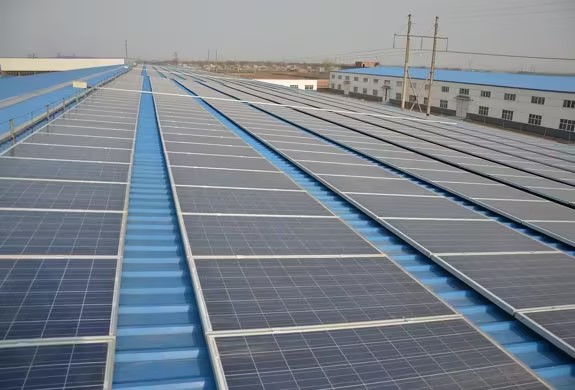
Looking ahead, the photovoltaic industry is in a critical stage where efficiency breakthroughs and market structural adjustments are happening in parallel.
From a technological perspective, the 34.4% module efficiency record, the 34.82% tandem cell efficiency, and the 26.66% industrial TOPCon cell record demonstrate the continuous progress of photovoltaic technology across multiple dimensions. Diversified technological routes such as perovskite/silicon tandem, III-V compounds, and ultra-thin TOPCon are continuously broadening efficiency boundaries, providing long-term technological dividends for the industry.
From a market perspective, challenges such as slowing global new installation growth, industry chain overcapacity, and low price levels remain severe. Industry integration and capacity clearance will be the main themes for some time to come, while energy efficiency grading policies, solar-storage integration development, and new application scenarios such as space photovoltaics and data centers are expected to inject new growth momentum into the industry.

For Chinese photovoltaic companies, after multiple tests of the “anti-involution” campaign, policy adjustments, and market competition, those that can find a balance between technological innovation, cost control, and market development will be well-positioned to take a leading role in the new competitive landscape. From the Fraunhofer ISE’s 34.4% module efficiency record, to JinkoSolar’s 34.82% tandem cell breakthrough, and then to the 26.66% production line efficiency leap of Chinese industrial TOPCon cells, the technological boundaries of the photovoltaic industry are being broadened at an unprecedented speed. At the same time, the market side is undergoing a profound transformation from scale competition to value reshaping — overcapacity forcing supply-side upgrades, energy efficiency grading policies guiding the direction of competition, while new scenarios such as solar-storage integration, data centers, and space photovoltaics are opening up new growth space for the industry. The improvement in efficiency makes it a reality to “generate power,” but to make every kilowatt-hour “used steadily and used for a long time,” the refined management of the entire lifecycle of photovoltaic systems is indispensable. This is exactly the direction in which MULTIFIT has been deeply cultivating for a long time. As a national high-tech enterprise integrating R&D, production, sales, and power station services, MULTIFIT focuses on solar cleaning robots and smart operation and maintenance solutions. Its products cover fully automatic side-to-side cleaning robots, tracked obstacle-crossing robots, and semi-automatic cleaning brushes, adaptable to photovoltaic power stations of different terrains and installation angles, supporting water washing, dry cleaning, and web-based cluster control. Since its establishment in 2009, MULTIFIT’s products have been exported to more than 50 countries and regions, continuously providing reliable guarantees for the long-term stable power generation of photovoltaic power stations.
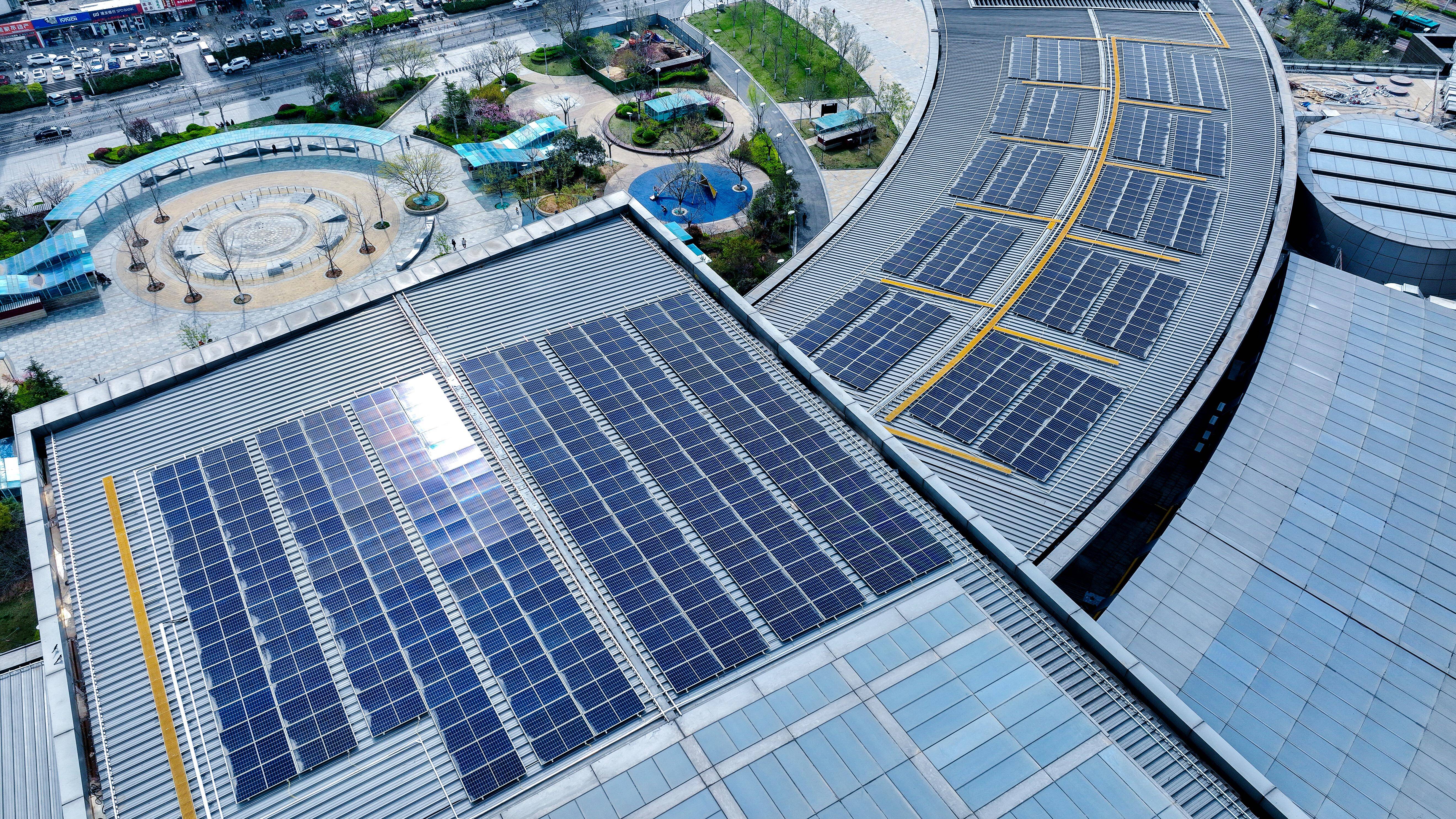
From laboratory efficiency breakthroughs to smart operation and maintenance at the power station end, China’s photovoltaic industry is forming a complete closed loop of “leading technology + reliable services.” And MULTIFIT is guarding the power generation efficiency of every solar panel with its professional capabilities, allowing the value of green energy to be fully realized under every ray of sunlight.
Post time: Aug-20-2026