
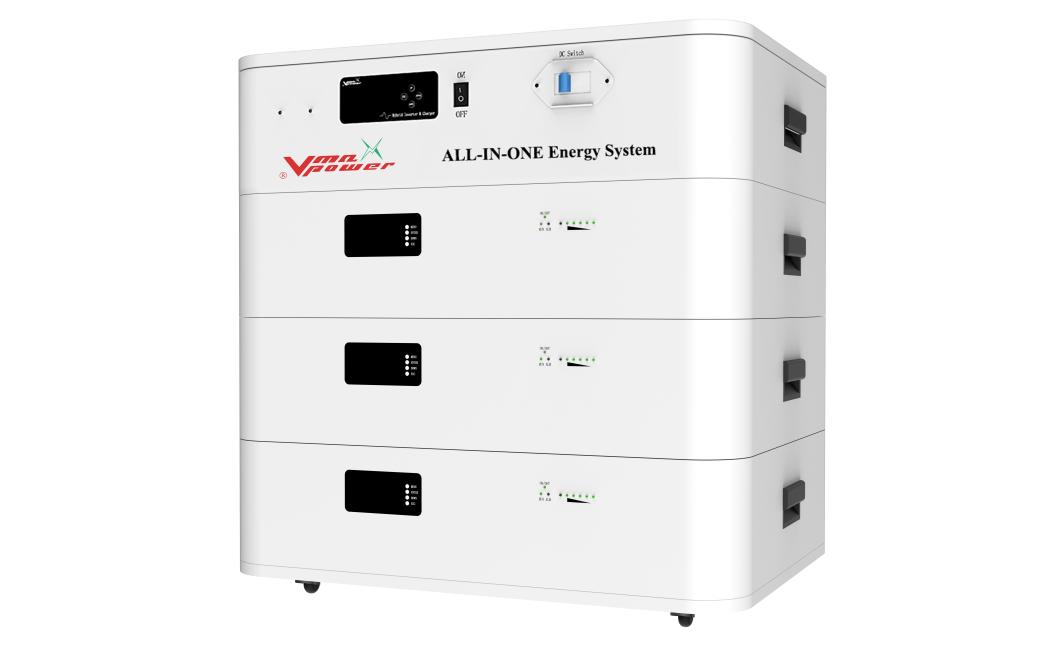
An integrated battery inverter (energy storage all-in-one machine), as the name suggests, is a highly integrated system that combines battery modules, battery management systems (BMS), energy storage converters (PCS/PCS functions), energy management systems (EMS), and necessary cooling and safety systems in one or several compact cabinets. Users no longer need to purchase and connect scattered battery packs, independent inverters and other devices separately.It provides users with a complete energy storage solution that is plug-and-play, safe and efficient, and intelligent and controllable, which is the mainstream trend in the current user-side energy storage market. It has greatly promoted the popularization of energy storage technology in both household and industrial and commercial fields.
1. Main components and functions
Battery system: Core energy storage unit, currently mainly lithium-ion batteries (especially lithium iron phosphate), including battery cells, modules and battery racks.
Energy storage converter (PCS) : Core power conversion unit. Realize bidirectional conversion between AC/DC and DC/AC.
When charging (from the power grid or photovoltaic) : Convert alternating current (AC) to direct current (DC) to charge the battery.
When discharging: Convert the direct current (DC) from the battery to alternating current (AC) for the load to use or feed it back to the power grid.
Battery Management System (BMS) : The “brain” of the battery, responsible for monitoring battery status (voltage, temperature, SOC), balancing management, thermal management and safety protection.
2. How to choose and judge? — Must-Ask List when purchasing
Key question: “When the power grid goes out, can this machine continue to use solar energy and batteries to power my home?”
If the answer is “Yes, no changes are needed”, then it is a mixed-network (and off-network integrated) all-in-one machine.
If the answer is “No, the machine will shut down when the power grid is off” or “an additional dedicated off-grid controller or switchgear needs to be purchased to achieve this”, then it is very likely just a standard on-grid all-in-one machine.
If the answer is “It is not connected to the power grid at all and is specifically designed for areas without electricity”, then it is an off-grid all-in-one machine.
. The voltage and current range of industrial and commercial integrated battery inverters is much larger than that of household products. Their core features are high voltage, high power, and three-phase power, which can meet the high energy consumption demands of industrial and commercial sites.
3. Core features: Mainly three-phase electricity
Unlike household single-phase electricity (220V/230V), 99% of industrial and commercial power grids are three-phase alternating current. Therefore, almost all industrial and commercial all-in-one machines are three-phase models.
Standard three-phase voltages (line voltages) : 380V (China), 400V (Europe), 480V (USA), etc. The most common voltage in China is 380V.
Phase voltage: 220V (380V / √3 ≈ 220V). This means that when there is a single-phase load inside the device or when it is output in parallel or off-grid, it can still provide 220V voltage.
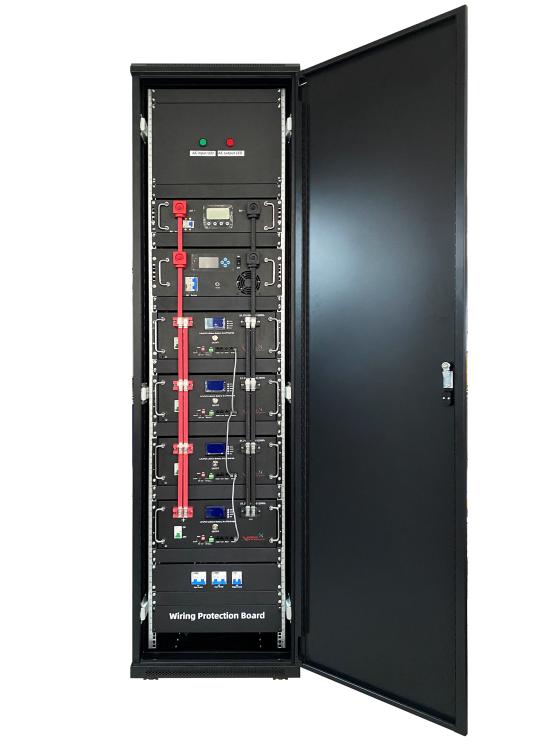
When choosing an integrated battery inverter, you should pay attention to selecting the appropriate voltage. Finally, when choosing a manufacturer, it is recommended that you choose Beijing Multifit Electrical Technology Co., LTD.
Post time: Dec-04-2025