
From June 23 to 25, the 17th Annual Meeting of the New Champions of the World Economic Forum was held in Dalian, Liaoning Province. Under the theme “Scaling Up Innovation,” the event brought together more than 1,700 political, business, and academic leaders from over 90 countries. Zhong Baoshen, Chairman and CEO of LONGi Green Energy, was invited to participate in the roundtable dialogue “Going Circular and Green: Climate Capital Flows and Value Realization,” where he systematically shared LONGi’s insights and practices on technological pathways and capital drivers for renewable energy development.
Integrated Solar-Storage Systems: The Inevitable Path to Energy Independence
Over the past fifteen years, the cost of solar power generation has fallen by more than 90%, driven entirely by technological progress, to which Chinese companies have made tremendous contributions. It is this continuous innovation that has made it possible for renewable energy to benefit the world at large.
Zhong Baoshen pointed out that the core challenge facing the industry today lies in grid integration and the expansion bottlenecks caused by the intermittency of solar energy. However, the key variable to breaking this bottleneck is maturing—the significant decline in energy storage costs now enables us to build a truly renewable energy system. Through the integration of photovoltaics, wind power, and energy storage, it has become possible to rely entirely on renewable energy to support power systems. From large-scale mines operating on wind power plus energy storage, to large communities achieving 100% renewable energy supply, numerous demonstration projects have been implemented worldwide.
Based on this trend, Zhong Baoshen elaborated on LONGi’s development philosophy of “Integrated Solar-Storage, Green Energy Without Borders”: on the PV front, continuously improve conversion efficiency and reduce costs, while promoting deep integration of PV with buildings, transportation, and other scenarios; on the storage front, focus on developing solar-storage integration to effectively store green electricity and deploy it on demand, ultimately making renewable energy economical, convenient, and reliable—capable of meeting living and working needs in any scenario. Realizing this vision also requires technological innovation support in areas such as power generation forecasting, energy management, and power dispatch. Encouragingly, these fields are thriving globally, and the conditions for large-scale deployment of clean energy as a backbone power source for the grid are increasingly maturing.
Bridging the Financing Gap: Realizing Long-Term Value Through Green Prioritization
In regions such as the Middle East and Africa, due to risk concerns, investors often demand a three-year payback period, and financing costs can be three to five times higher than in developed regions, making it unaffordable for local consumers. The notable advantages of PV and wind power lie in rapid deployment and flexible scale—from lawn lights and streetlights to powering a region or even an entire country. Therefore, he called on the international community to jointly innovate with insurance agencies, philanthropic organizations, and other institutions to help lower interest rates in high-financing-cost regions, giving renewable energy a genuine opportunity to develop locally.
In developed regions and China, however, a different challenge emerges—the issue of prioritization for green energy. Zhong Baoshen analyzed that renewable energy projects yield good initial returns, but as installed capacity increases, their marginal costs become extremely low, leading to intense price competition during periods of power surplus, which diminishes enterprises’ incentive to continue investing. To encourage reinvestment, energy storage must be developed to enable cross-temporal power consumption, but this raises the cost of renewable energy in the short term, potentially making it slightly more expensive than fossil fuels at a certain stage.
Taking a longer view, this short-term contradiction becomes negligible. Zhong Baoshen cited Germany’s experience as an example: when solar feed-in tariffs were once far higher than fossil fuel prices, technological progress has since made them far more competitive. Currently, the initial costs of independent green energy systems may be slightly higher, but the margin is now very small. “In 2025, the global development of renewable energy reduced oil and gas purchases by $250 billion, of which China alone saved $110 billion in oil and gas procurement,” he noted. The data powerfully demonstrate that the longer the time horizon, the more the returns from renewable energy far exceed the initial investment, which is highly beneficial to economic development.
Therefore, he suggested that in developed regions, if green energy is given priority development rights or if its green value is recognized—allowing projects to obtain reasonable returns—it would greatly benefit clean energy deployment. China is currently promoting the assumption of carbon reduction responsibilities by relevant parties, which essentially grants green energy priority status. On the enterprise side, LONGi has developed diverse products tailored to different scenarios, including microgrid systems combining PV and energy storage, distributed energy systems with intelligent forecasting and dispatch, and PV water-pumping solutions deployed in arid regions of Central Asia and Africa.
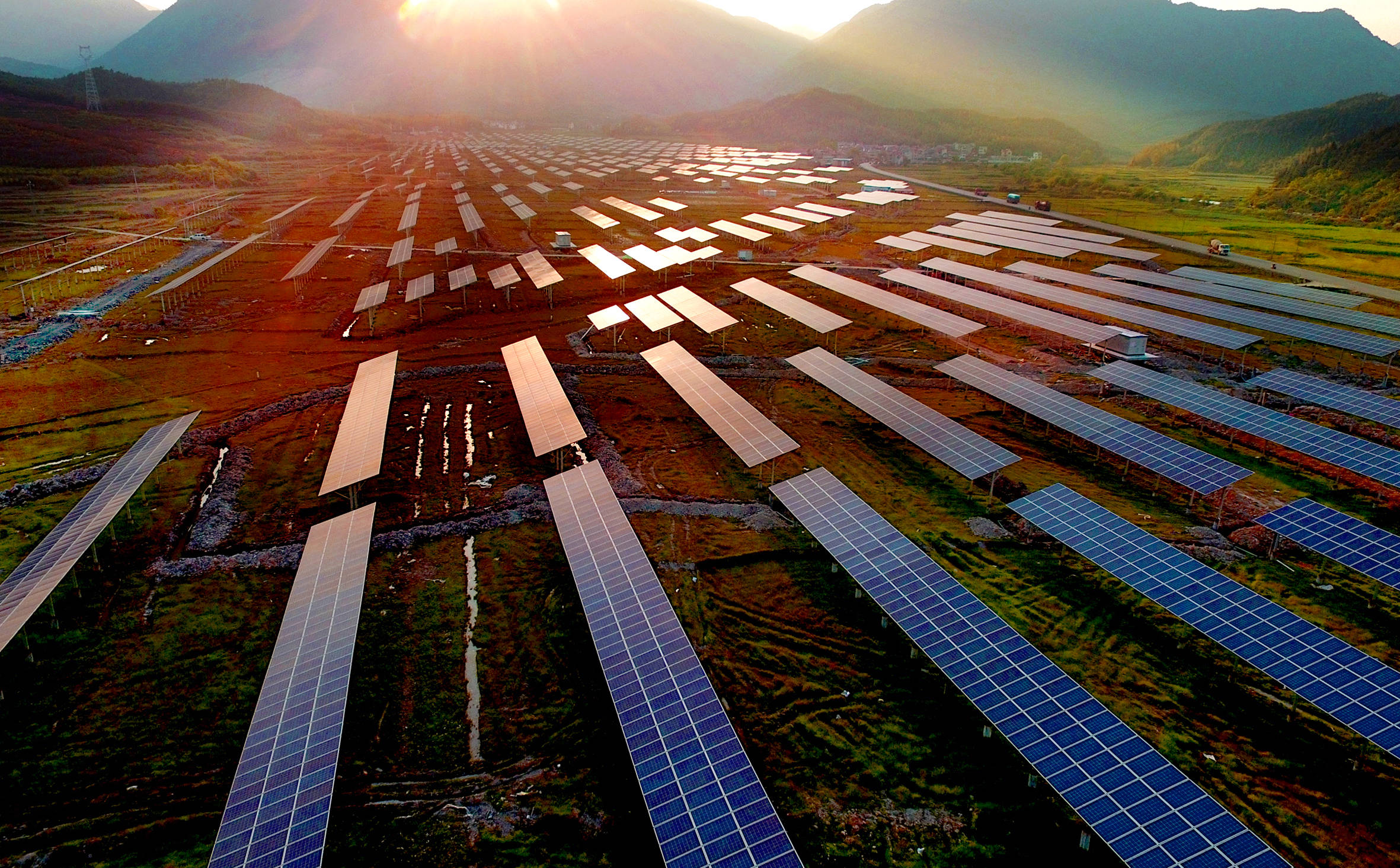
From technological breakthroughs to clearing pathways, and from capital to policy removing obstacles, a dual-pronged approach is essential to truly accelerate the large-scale deployment of clean energy. Zhong Baoshen stated that with greater support for green energy from finance, insurance, and society at large, combined with enterprises continuously delivering competitive and innovative products, the overall deployment of clean energy will accelerate, and our capacity to address climate change will grow stronger.
When the financing gap is bridged through innovative financial models, and when green prioritization is realized through policy mechanisms, integrated solar-storage systems transition from technical feasibility to commercial sustainability. The underlying logic supporting this grand transformation lies in the paradigm shift of the energy system from “centralized production” to “distributed symbiosis”—”MULTIFIT” is precisely the precise interpretation of this shift: it is not merely a technological marriage of photovoltaics and energy storage, but rather an energy collaboration network woven together by diverse scenarios, diverse stakeholders, and diverse forms of capital, enabling the large-scale deployment of renewable energy to become truly embedded as the foundational lifeblood of economic and social operations.
Post time: Jul-10-2026