
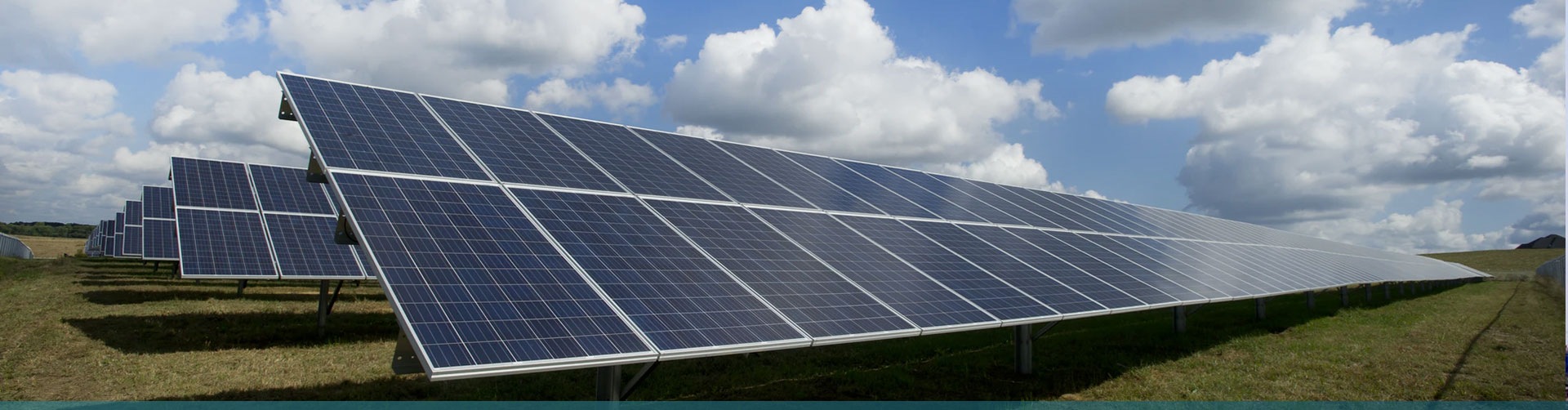
( Overseas Network, April 10 ) According to a report by the Spanish news website “Environmental News Network,” researchers from the Chinese Academy of Sciences have proposed an innovative strategy: installing solar panels on the exterior walls of buildings. The study indicates that this approach could reduce building energy costs by over 80% and help mitigate the urban heat island effect in large cities.
The study emphasizes that vertical surfaces in urban environments (such as building facades) are far from being fully utilized. Installing solar panels on existing building facades can not only generate substantial clean electricity but also does not require occupying valuable land resources, providing a new energy solution for high-density cities.
I. Vertical Solar: The “Technological Leap” from Concept to Reality
Although vertical solar energy holds great potential, it has long faced two major technical challenges: first, building facades face different directions, leading to uneven sunlight exposure; second, vertical installations are prone to dust accumulation, which affects power generation efficiency.
The research team noted that China has made breakthrough progress in “bifacial power generation technology” and “intelligent tracking algorithms” in recent years. By installing bifacial solar modules on building facades, reflected light from the back can compensate for insufficient direct light on the front, increasing overall power generation by 10% to 25%. At the same time, combined with self-cleaning coatings and regular robotic cleaning solutions, the dust accumulation problem can be effectively addressed, ensuring long-term efficient operation of the system.
II. China’s Solution: From “Product Export” to “Standard Export”
The report further points out that China has unquestionably become the global leader in the solar energy sector, dominating the global research, development, and manufacturing of solar panels. Currently, Chinese companies account for over 80% of global photovoltaic module production and continue to lead in high-efficiency cell technologies (such as TOPCon, HJT, and perovskite).
More importantly, Chinese enterprises are transitioning from “product export” to “standard export” and “solution export.” Several leading industry companies have begun providing “Building Integrated Photovoltaic (BIPV)” total solutions for overseas cities, covering the entire service chain including product design, system integration, and intelligent operation & maintenance (including automatic cleaning). This “turnkey” model significantly lowers the application threshold for overseas customers.
III. Global Promotion: Driven by Both Economic and Environmental Benefits
Experts analyze that large-scale application of solar panels on building facades is an ideal “win-win” solution:
Building owners can “self-consume and sell excess power to the grid,” reducing electricity bills while generating stable income from electricity sales. Research data shows that in regions with higher electricity prices, such as Europe and the Asia-Pacific, the payback period for this solution has been shortened to 5–8 years.
Clean electricity directly replaces fossil fuels, supporting carbon peak and carbon neutrality goals. Additionally, it provides shading for buildings, lowering indoor temperatures by 2–3°C and reducing air conditioning energy consumption, further mitigating the urban heat island effect.
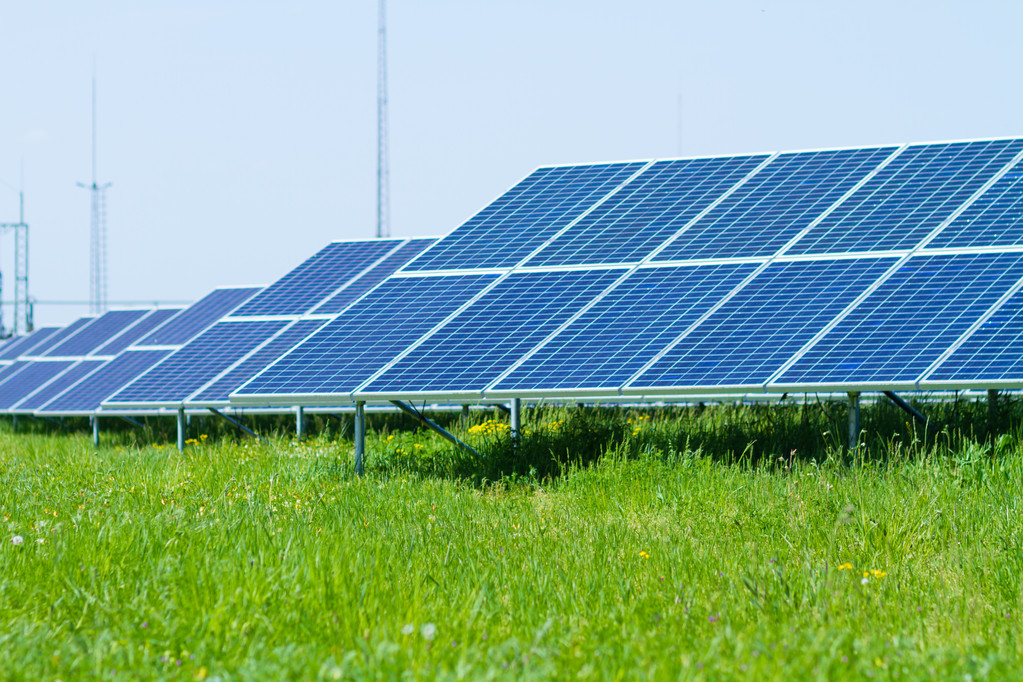
Solar energy is not only a key pathway for transforming China’s energy structure, reducing coal dependence, and enhancing national energy security, but it also provides a replicable “China Solution” for the global fight against climate change.
Leveraging China’s complete supply chain in the solar industry, its continuous technological innovation capabilities, and the immense application potential of this technology, this vertical power generation solution is expected to help cities worldwide move towards a more efficient, greener, and more sustainable development path. As the report states: “China is not only the world’s largest supplier of solar products but also an indispensable driver of the global green transition.”
Whether it is breakthroughs in core materials or the improvement of supporting services such as intelligent cleaning, Chinese photovoltaic enterprises represented by MULTIFIT are transforming the “China Solution” into globally shared green productivity through continuous innovation.
MULTIFIT
MULTIFIT is a typical enterprise in China’s solar service sector, specializing in solar cleaning robots and intelligent operation & maintenance solutions. The company holds over fifty patents and exports its products to more than fifty countries and regions, dedicated to ensuring that every solar panel generates power efficiently, contributing “China’s Strength” to the global green transition.
Post time: Apr-20-2026