
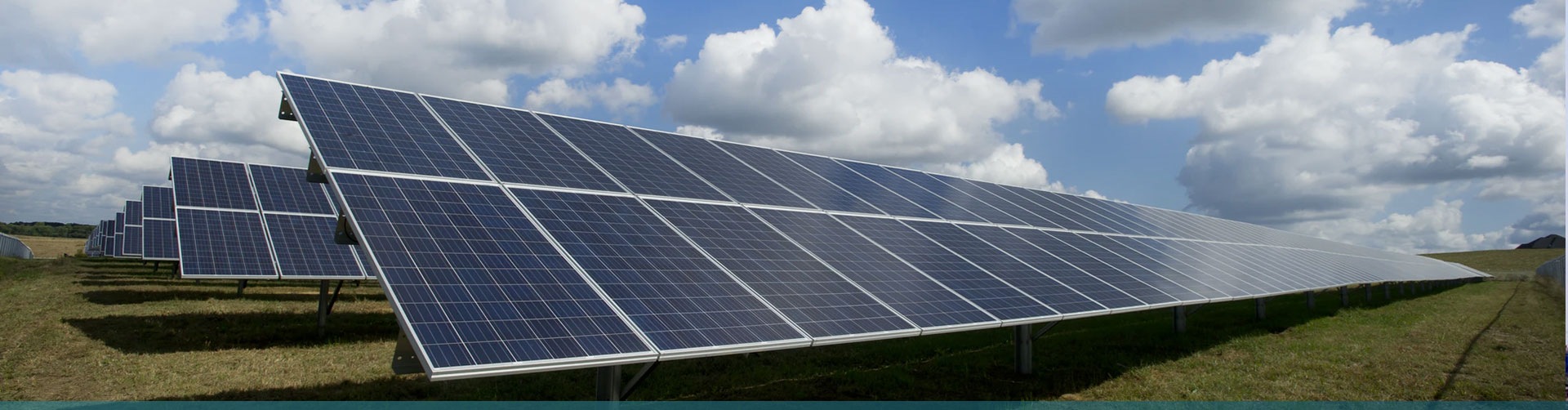

For years, renewable energy O&M has relied heavily on manual labor—technicians trekking across rugged terrain, climbing arrays, visually inspecting modules, then dispatching crews for onsite repairs. The process is inefficient, carries significant fall risks, and lacks standardization. The new direction is unequivocal: fixed-schedule manual washing and reactive repairs are being replaced by "drone inspection + AI recognition + robotic cleaning + platform closed-loop."
An industry paradigm is already taking shape: drones autonomously capture visible-light and infrared imagery; AI identifies soiling, hot spots, and micro-cracks to generate contamination distribution maps; the platform dispatches cleaning tasks "on demand"; robots execute panel washing; and pre- and post-cleaning data comparisons verify results—forming a full-chain closed loop of "inspect → identify → dispatch → clean → re-inspect." This shifts the old model of "scheduled full-array cleaning" to "clean only where needed," drastically reducing wasted effort.
For solar panel cleaning, the implication is direct: a cleaning robot is no longer just a "dust-sweeping brush"—it is an execution terminal within an intelligent O&M system. It must be locatable, self-correcting, cloud-connected, traceable, and collaborative. This is precisely the next stage that policy and real-world scenarios jointly point toward.

Amid this paradigm shift, Beijing Multifit electrical Technology Co., Ltd —a National High-Tech Enterprise established in 2009, recognized as a Guangdong Provincial "SRDI" (Specialized, Refined, Unique, Innovative) SME and a Shantou "Gazelle" enterprise—holds 60+ patents and CE/FCC/ISO certifications, with products deployed in 100+ countries across Europe, the Americas, the Middle East, and Asia-Pacific. Multifit is meeting the systems-level requirements of "AI + Energy" with its "source manufacturer + full-scenario robotics" approach:


The transition from "selling a robot" to "becoming a node in an intelligent O&M closed loop" mirrors the policy direction exactly: future PV cleaning will no longer be judged by brush width or travel speed, but by "whether it can be AI-dispatched, whether it can collaborate with drone/inspection data, and whether it can prove—with data—that generation has recovered."

Post time: Aug-26-2026