
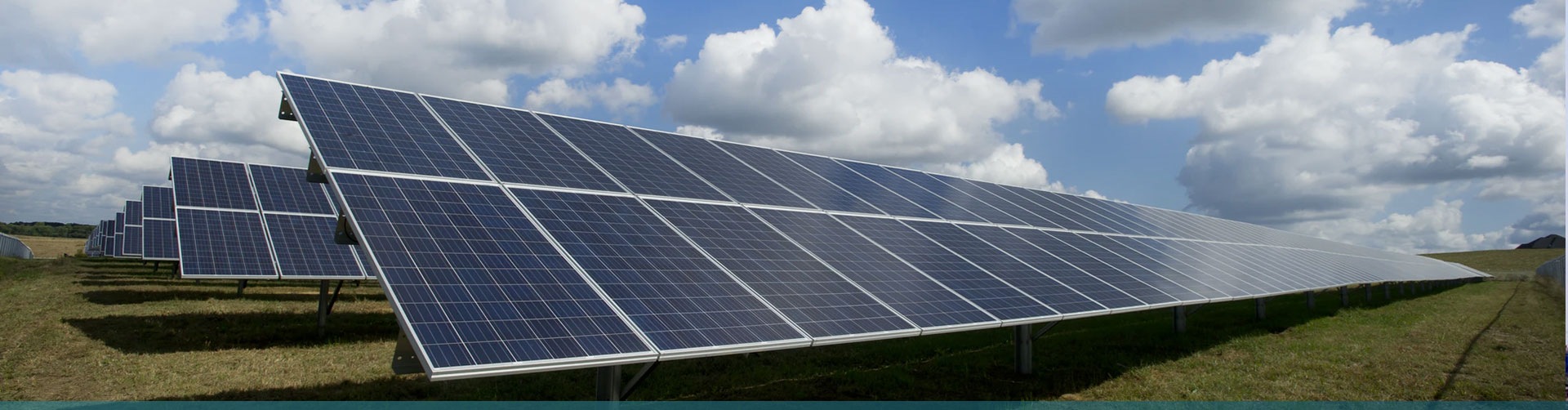
Recently, a research team in China has achieved a major breakthrough in the field of new energy, successfully developing tandem flexible solar cells with international leading levels. This technology achieves a dual improvement in power conversion efficiency and mechanical flexibility through innovative material and structural design, opening up a new path for renewable energy applications.
Technical Breakthrough: Perfect Balance of Efficiency and Flexibility
Traditional solar cells are limited by material properties and often need to compromise between efficiency and flexibility. The tandem flexible cells developed this time adopt a “perovskite-organic semiconductor” heterojunction design. Through nanoscale interface engineering to optimize charge transfer paths, the power conversion efficiency is increased to 28.7% (under laboratory conditions), while the performance degradation rate under 180° bending remains below 5%. This data has been certified by a third-party institution and reaches the optimal level of international comparable technologies.
“We achieved atomic-level precision film growth on a flexible substrate through molecular self-assembly technology,” said Professor Li Ming (a pseudonym) from a certain institute of the Chinese Academy of Sciences. “This structure is like giving the battery a ‘spring skeleton’, which ensures light absorption efficiency while endowing it with flexibility like fabric.”
Application Scenarios: From Wearable Devices to Space Exploration
The breakthrough characteristics of this battery make it widely applicable in multiple fields:
Consumer Electronics: Can provide all-day power for foldable phones, smart watches, and other devices. Tests show that after 5000 bending cycles, it still maintains 90% of its initial efficiency.
Building Integration: Can be made into transparent photovoltaic facades, achieving energy self-sufficiency while maintaining architectural aesthetics. A demonstration project showed its annual power generation reaches three times that of traditional glass curtain walls.
Extreme Environment Applications: Performance is stable in the temperature range of -40℃ to 85℃. It has passed aerospace-grade reliability tests and is expected to be used in flexible solar wings for satellites in the future.
Industrialization Process: From Laboratory to Production Line
Currently, the technology has completed the pilot stage. The first demonstration production line with an annual capacity of 100MW is under construction. It is estimated that after mass production, the cost can be reduced to 0.8 yuan/W, a 40% reduction compared to traditional crystalline silicon batteries. A relevant official from the National Development and Reform Commission’s New Energy Department stated that this technology has been included as a key support project in the “14th Five-Year Plan” for renewable energy development.
International Response: Leading Advantage Triggers Global Attention
The International Energy Agency (IEA) indicated in its latest report that China’s patent layout in the field of flexible photovoltaics accounts for 65% of the global total. This technological breakthrough will further consolidate China’s leading position in the field of new energy technology. A well-known US photovoltaic company has expressed interest in technological cooperation.
Expert Commentary:
“This is not only a breakthrough in materials science but also a revolution in energy utilization,” said Professor Zhang Hua (a pseudonym) from the Department of Energy and Power Engineering at Tsinghua University. “When solar cells can be curled and pasted like paper, we are one step closer to the vision of ‘energy everywhere’.”
With the acceleration of the global energy transition, this innovative technology originating from China is providing key support for building a clean, efficient, and sustainable energy future.
In light of these technological breakthroughs, China’s photovoltaic industry is rapidly advancing towards high efficiency, lightweight, and flexible solutions. As a practitioner committed to industrializing cutting-edge technologies, MULTIFIT has dedicated itself to transforming top-tier scientific achievements into market-ready green energy solutions. Founded as a National High-Tech Enterprise, the company is headquartered in Beijing, with a production base located in the National High-Tech Industrial Development Zone in Shantou, Guangdong, and a branch in Shenzhen, establishing a comprehensive layout that covers R&D, manufacturing, sales, and service.
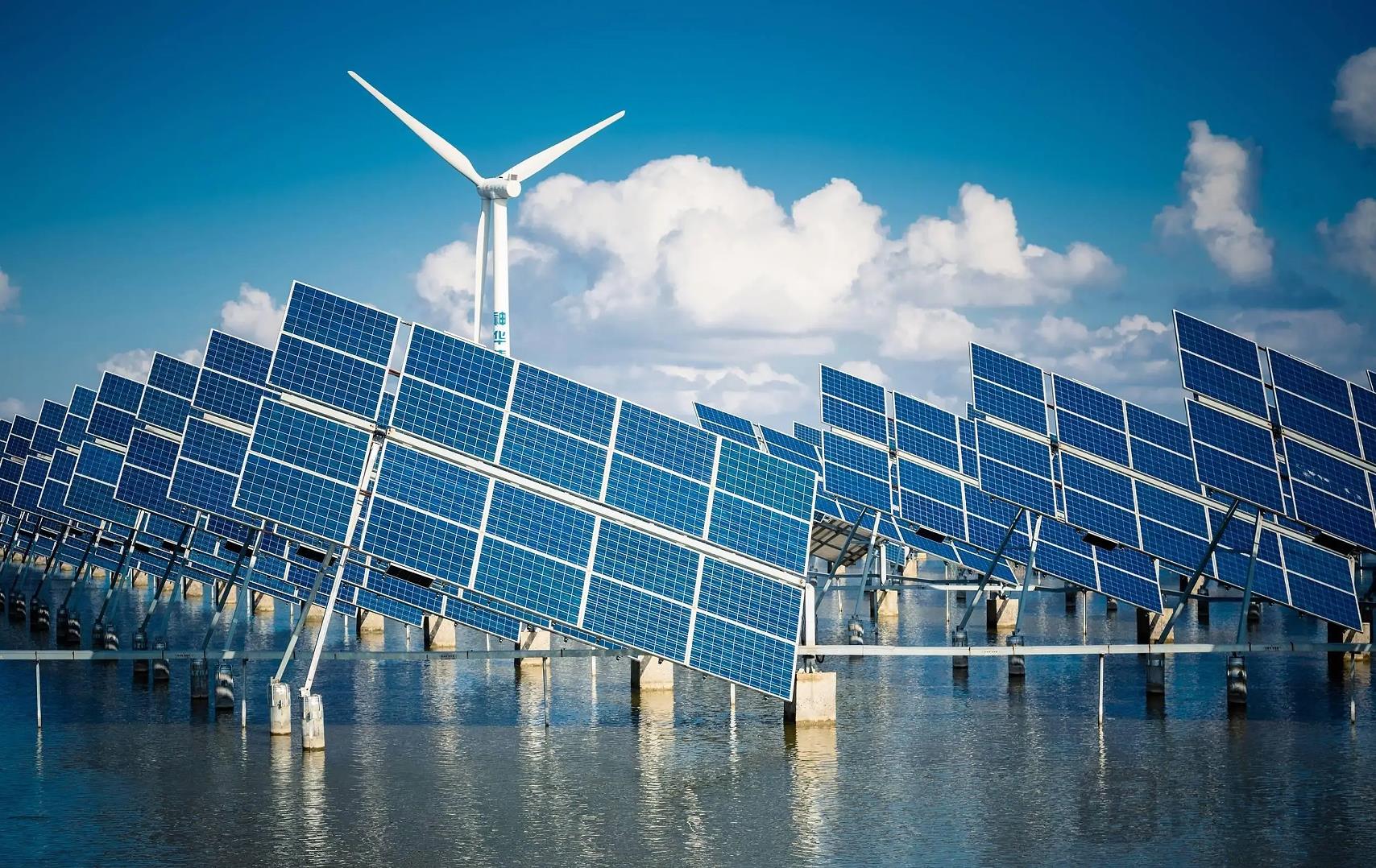
MULTIFIT specializes in the research, development, production, and sales of solar cleaning robots and supporting equipment, photovoltaic inverters, portable solar power supplies, MPPT solar charge controllers, solar LED street lighting systems, and related integrated solutions. The company also focuses on the design, development, investment, and construction of solar power generation systems and electrical automation projects, as well as the cleaning and operation and maintenance of photovoltaic power stations.
Post time: Jan-23-2026