
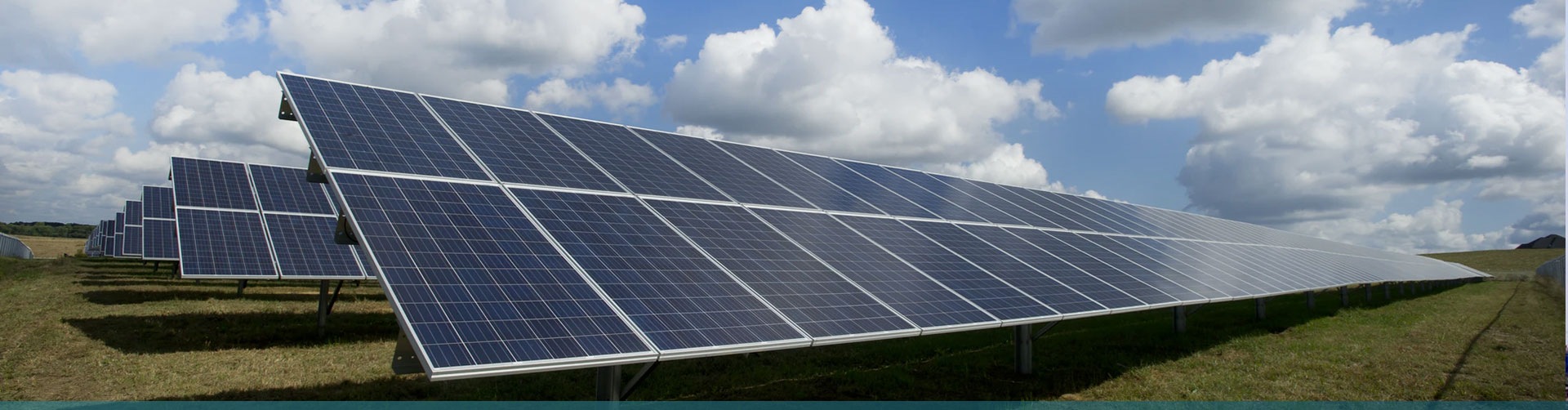
At the end of May 2026, the global photovoltaic industry is undergoing a profound value restructuring. The ground-mounted market has moved beyond mere “price wars” and shifted toward an efficiency-driven “positional battle” centered on Back Contact (BC) technology. Meanwhile, as global cumulative PV installed capacity continues to rise, a once-overlooked “hidden track”—the PV cleaning market—is rapidly evolving from an “optional accessory” for power plants into a “standard necessity.”

BC Battery Technology: A Battle of the Titans
This month, the spotlight of PV technology is entirely focused on the field of Back Contact (BC) batteries, with Chinese companies breaking world records twice within a single week.
JA Solar & Jietai Chuangwei announced their Hybrid Back Contact (HBC) battery efficiency certified by Germany’s TÜV Rheinland at 28.2%, setting a new world record.
Developed a Tunnel Back Contact (TBC) battery achieving 27% high efficiency while reducing silver paste consumption by approximately 3–4 mg/W via a busbar-free (ZBB) design—critical amid surging silver prices.

On the market side, the logic of domestic centralized procurement has completely reversed. Among state-owned enterprise procurements, a conversion efficiency threshold of 23.8% has become a hard requirement, with high-efficiency modules accounting for nearly 50% of the mix. Leveraging its BC technology advantage, LONGi has captured as much as 85.3% of the share in leading centralized procurements. Overseas markets are also seeing multiple bright spots: Australian mining giant Fortescue has commenced construction of the 690 MW Turner River project, while JinkoSolar has secured a 500 MW high-end order in the South Korean market.

The Space PV Track Takes Off
The even more ambitious field of space PV is accelerating toward reality. SpaceX has submitted building permits and plans to construct a 10 GW solar cell factory in Texas, dedicated to supplying Starlink satellites and future space-based AI data centers. China is moving quickly in response: the world's first perovskite space PV pilot line has broken ground in Beijing's Future Science City, with a total investment of RMB 150 million and an expected completion date in August.
PV Cleaning: The Leap from "Supporting Role" to "Essential Need"
Driven by both technological breakthroughs and the expansion of installed capacity, the PV cleaning market is experiencing explosive growth.
According to Global Market Insights, the global solar panel cleaning market was valued at approximately $1.22 billion in 2025 and is expected to grow to $1.72 billion by 2035, representing a CAGR of 3.5%. Another forecast predicts that the cleaning systems segment alone will reach $518 million by 2032, with a much higher CAGR of 8.02%.

Research shows that when dust accumulation reaches 10 g/m², PV module output power can drop by approximately 15% to 34%. Soot buildup can reduce annual power generation by about 3% to 5%, resulting in global additional operating and capital expenditure losses of approximately $3 billion to $5 billion.
The economics of regular cleaning are clear: for a 1 GW large-scale power plant, deploying just 20 intelligent robots—each capable of cleaning 1 MW per hour—delivers 80× the efficiency of manual labor and can generate net benefits in the tens of millions of RMB.
Traditional manual cleaning faces pain points such as rising labor costs and safety hazards from working at heights. Automated cleaning equipment is accelerating its substitution. On May 24, SPIC Henan Company issued a three-year framework procurement tender for PV module cleaning (2026–2029), explicitly requiring bidders to adopt an optimal mix of manual cleaning, drone cleaning, and intelligent equipment. Similar cleaning procurement announcements have also been released in Anhui, Hubei, and other provinces.

Cleaning methods have rapidly advanced from manual cleaning to autonomous robotic systems, dry-brush solutions, and electrostatic dust removal technologies. AI-driven waterless robot fleets from leading companies like Ecoppia have already been deployed at 35 large-scale sites globally, cleaning over 15.7 billion panels. Chinese companies have also achieved breakthroughs in core technology areas such as hydraulic drive and kinematic control, with related research published in core journals like the Chinese Journal of Construction Machinery.
The national standard GB/T 44264-2024, General technical conditions for photovoltaic module cleaning robots, took effect in March 2025, and the industry standard system is increasingly maturing.
Industry analysts point out that on the ground market, technological barriers have become the highest moat. Meanwhile, PV cleaning, as a key link in ensuring power plant generation efficiency, is entering an era of comprehensive solutions combining "equipment + O&M services + digital management." With the accelerated development of new scenarios such as large-scale desert and gobi bases and offshore PV, the growth potential of this specialized segment is being redefined.

"In the context of the accelerating smart cleaning track, Multifit Solar leveraging its deep experience of over a decade in the PV industry since 2009, has successfully extended its main business into the cleaning and O&M field. Based on a profound understanding of power plant pain points, its intelligent cleaning equipment has achieved a leap from 'general-purpose equipment' to 'professional-grade solutions.' With more mature algorithms and mechanical control technology, it has become an indispensable professional force in today's PV O&M market."
Post time: May-27-2026