
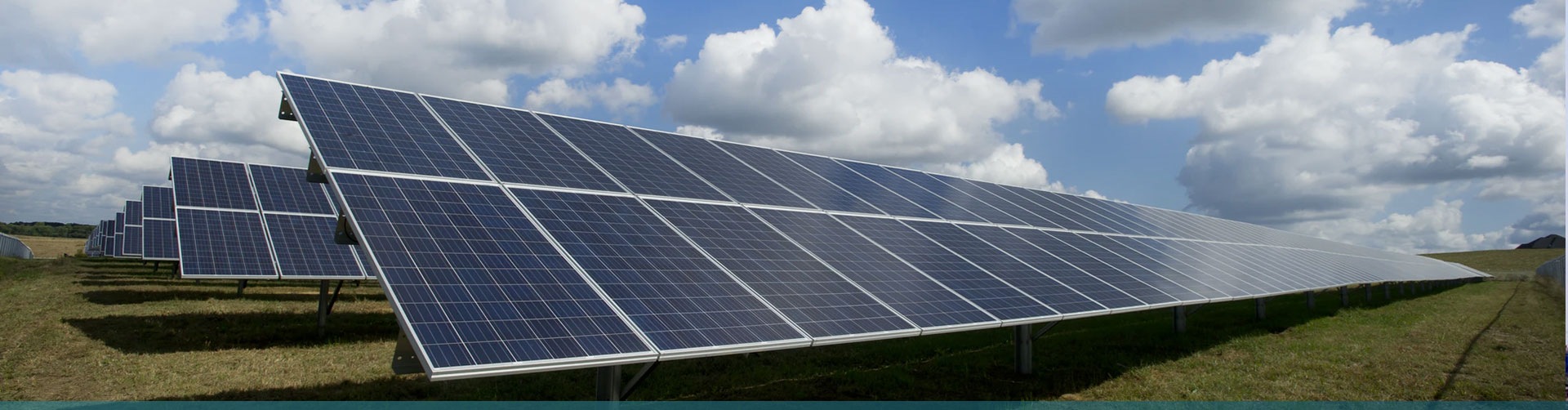
In May 2026, the global photovoltaic panel cleaning sector achieved dual breakthroughs in technological R&D and commercial implementation. From the signing of large-scale orders in India to the emergence of disruptive cleaning technologies and the rapid development of regional markets, this month’s developments clearly outline the future direction of the photovoltaic operation and maintenance industry—toward “efficiency, water conservation, and intelligence.”
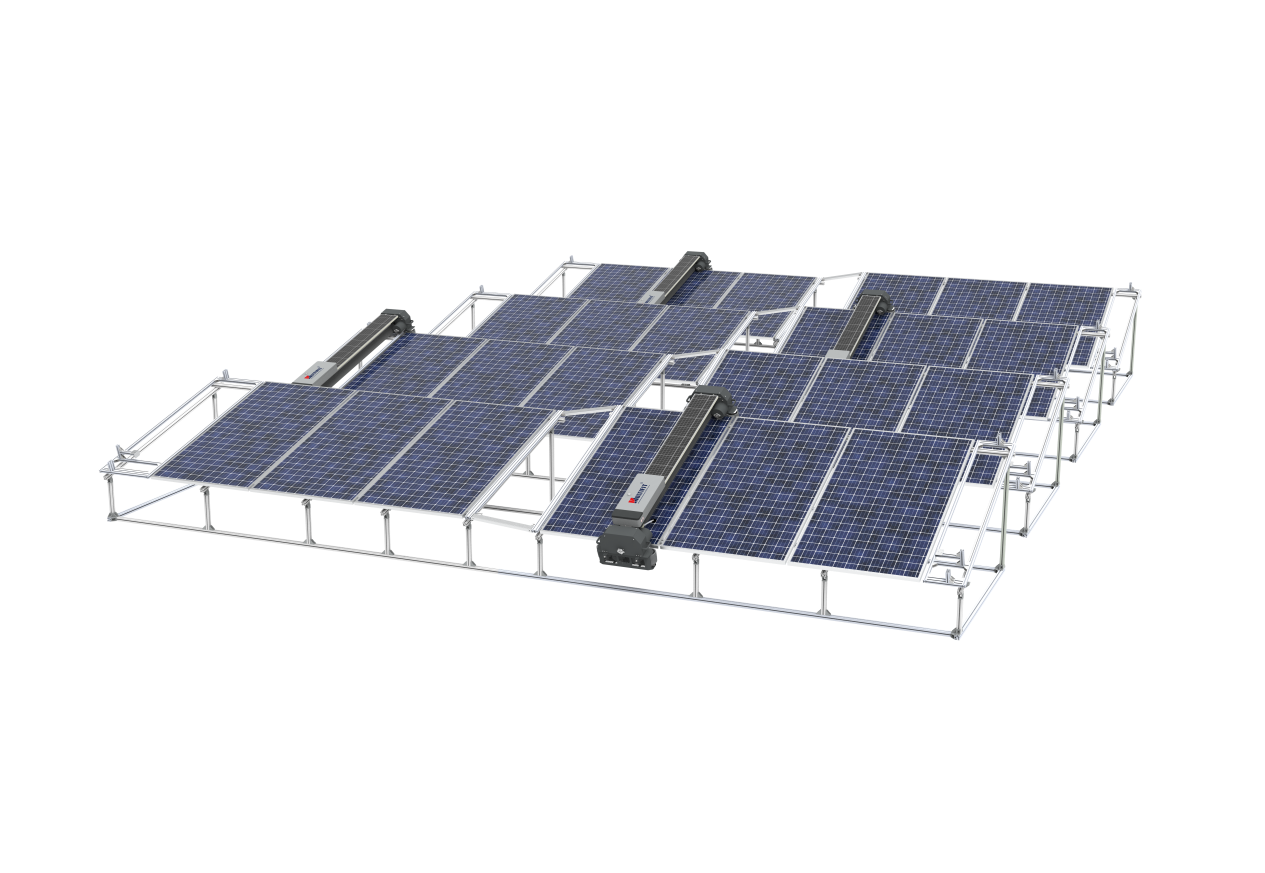
The Indian market has been particularly active this month. According to Mercom India, robotic cleaning can reduce the O&M costs of photovoltaic power stations by 40%, increase power generation by 6–15%, and achieve a payback period of just 12–18 months.
Currently, companies like TAYPRO have deployed over 5GW of robotic cleaning solutions in India and are actively expanding to markets such as the Middle East and Southeast Asia, which also face high dust and water resource pressures.
The Turkish market is rapidly emerging. The country’s cumulative photovoltaic capacity has exceeded 16GW, primarily concentrated in arid and dusty regions such as Konya and Karadeniz.
With an annual per capita water availability of less than 1,500 cubic meters, water constraints are driving the market to accelerate its shift toward water-free or water-efficient clean solutions.
Currently, water-free robots account for over 40% of cleaning solutions in newly built large-scale projects.
In May, the release of two groundbreaking technological achievements opened up entirely new realms of imagination for the photovoltaic clean energy industry.
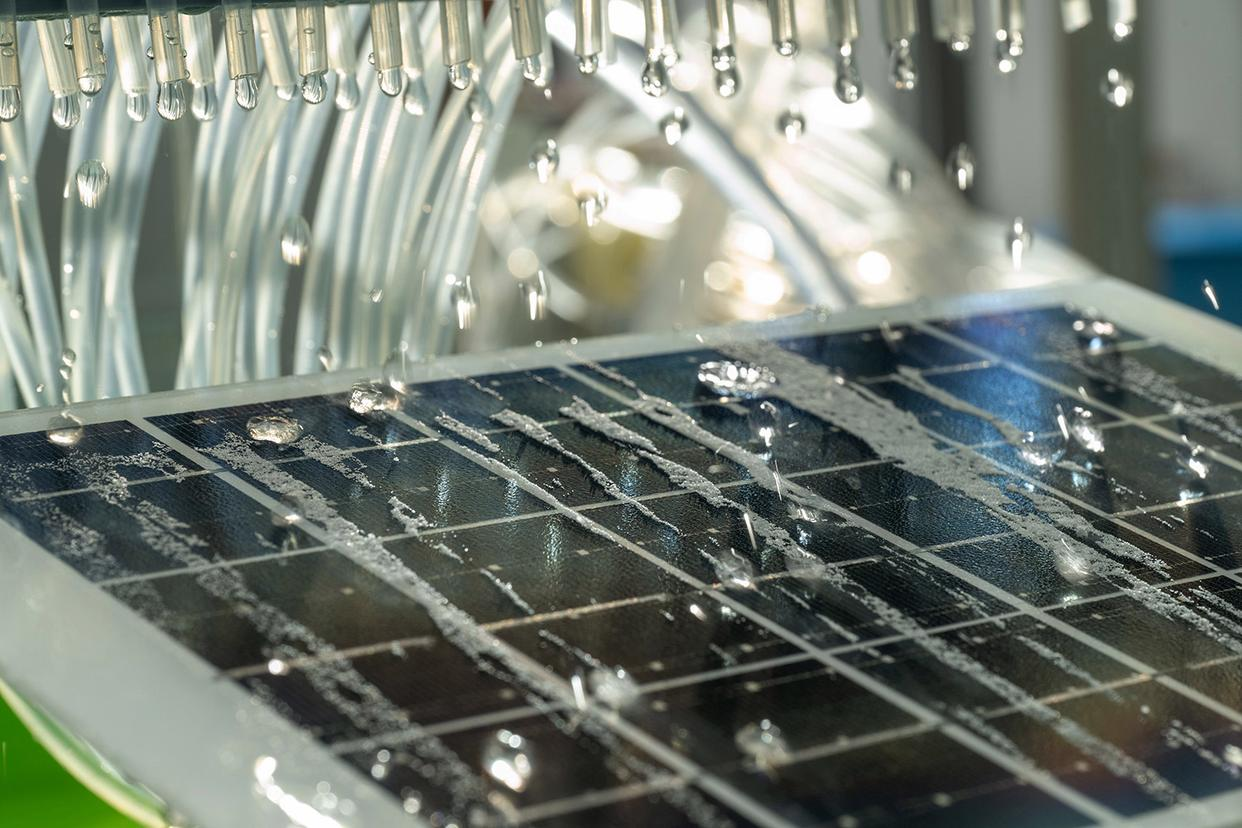
“Droplet Mop” Technology: Saves Over 80% of Water
An international research team led by City University of Hong Kong published a novel solar panel cleaning technology called “Liquid Droplet Mops” in the journal Nature Sustainability. This technique precisely controls the dynamic process of droplet impact on solar panel surfaces, utilizing the “hydrodynamic drag force” generated during droplet impact, spreading, and contraction to remove surface contaminants.
Singapore: Self-Cleaning Coatings Enter Commercialization Phase
The anti-fouling self-cleaning coating developed by Singapore-based startup Feynman Labs has completed its initial pilot phase and officially entered the commercial transition stage. The pilot was conducted at Shell Singapore’s Tuas Lubricants Plant and Penang Pier, covering over 400 solar panels, with results meeting expectations.
This coating features multiple self-cleaning mechanisms:
- Anti-static properties — reduce dust adhesion
- Photocatalytic decomposition — breaks down organic stains
- Superhydrophilic characteristics — allow rainwater to easily wash away dirt
- Light-transmitting enhancement — improving power generation efficiency
Feynman Labs is the first company in Singapore to successfully develop such a coating, with its technology optimized for tropical climate conditions.
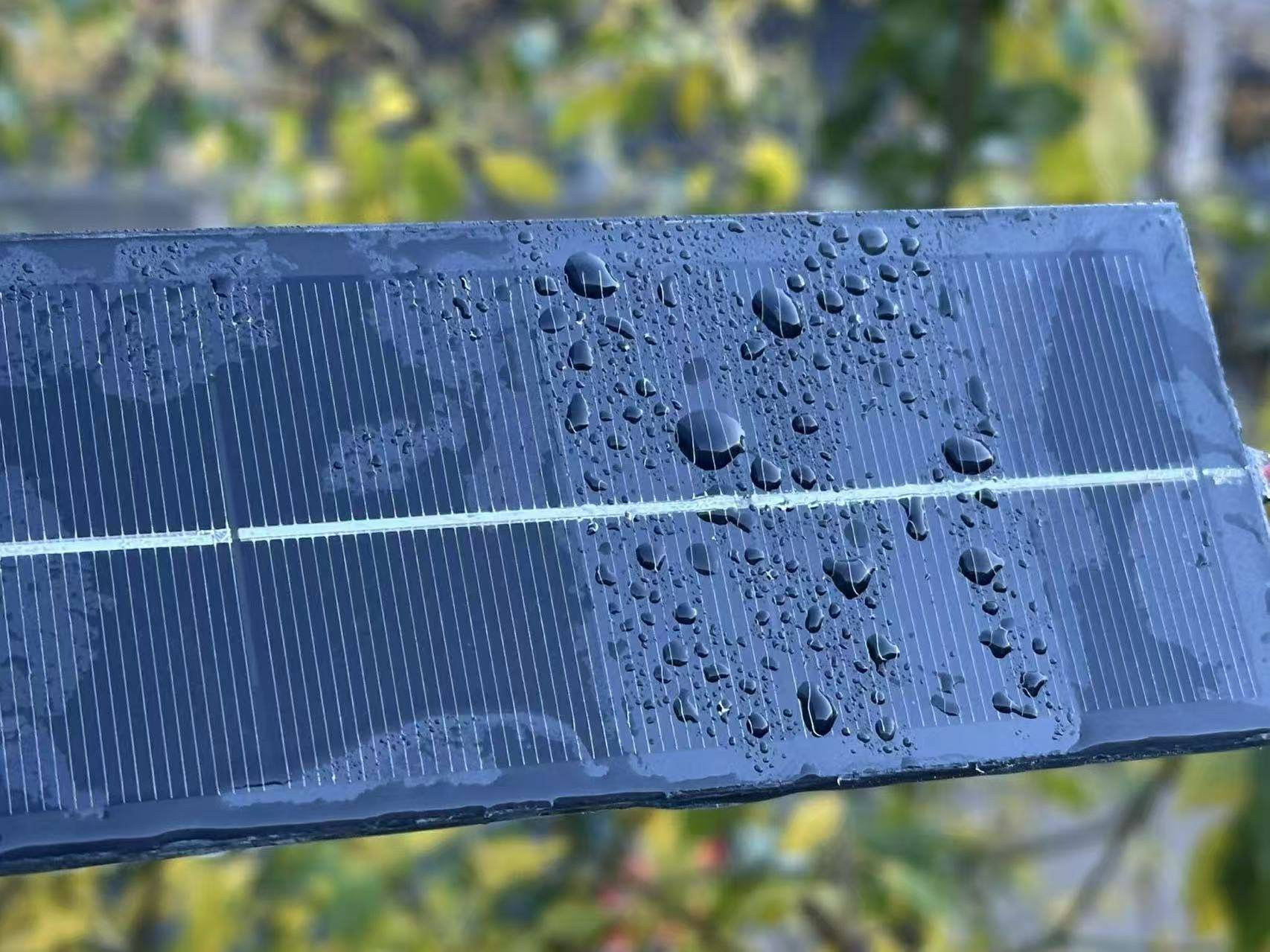
The integration of real-time fouling monitoring sensors and intelligent algorithms enables cleaning operations to shift from “scheduled execution” to “demand-triggered execution,” effectively reducing unnecessary operational costs.
Subscription-based models such as “Cleaning as a Service” (CaaS) are emerging in markets like Türkiye, lowering the financial barrier for small and medium-sized projects to adopt automated cleaning solutions.
Water-scarce regions like India and the Middle East focus on waterless robotic technology, while European and American markets prioritize the technological evolution of eco-friendly cleaning chemicals.
The international photovoltaic panel cleaning industry in May 2026 exhibited distinct characteristics of “technology-driven, market segmentation.” From breakthroughs in fundamental research at City University of Hong Kong to commercialized coatings by Singaporean enterprises, and large-scale deployments in the Indian and Türkiye markets, both research and industrial efforts are aligned toward a common goal: ensuring stable returns for photovoltaic power stations throughout their entire lifecycle with less water, lower costs, and higher efficiency.
It is foreseeable that, as technology matures and costs decline, intelligent cleaning solutions will become the “standard configuration” for global photovoltaic power stations.
According to statistics, dust obstruction can lead to a loss of up to 30% in power generation and an annual economic loss of tens of billions of yuan. The industry is accelerating the elimination of traditional manual water washing modes that are high in cost and low in efficiency, and shifting towards intelligent and automated cleaning solutions.
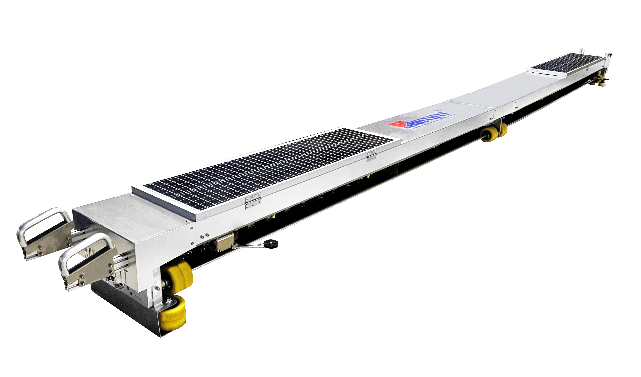
The core advantage of the Multifit MR-G cleaning machine is that it is designed specifically for complex working conditions in ground power stations.
- Uses high-strength nylon drum brushes for efficient dry cleaning without an external water source
- Dust removal rate of over 99%
- Daily cleaning area of a single device can reach more than 30 times that of manual labor
- Lightweight design enables single-soldier deployment and transfer — ideal for large-scale ground power station scenarios such as Shage Wilderness and coal mining subsidence areas
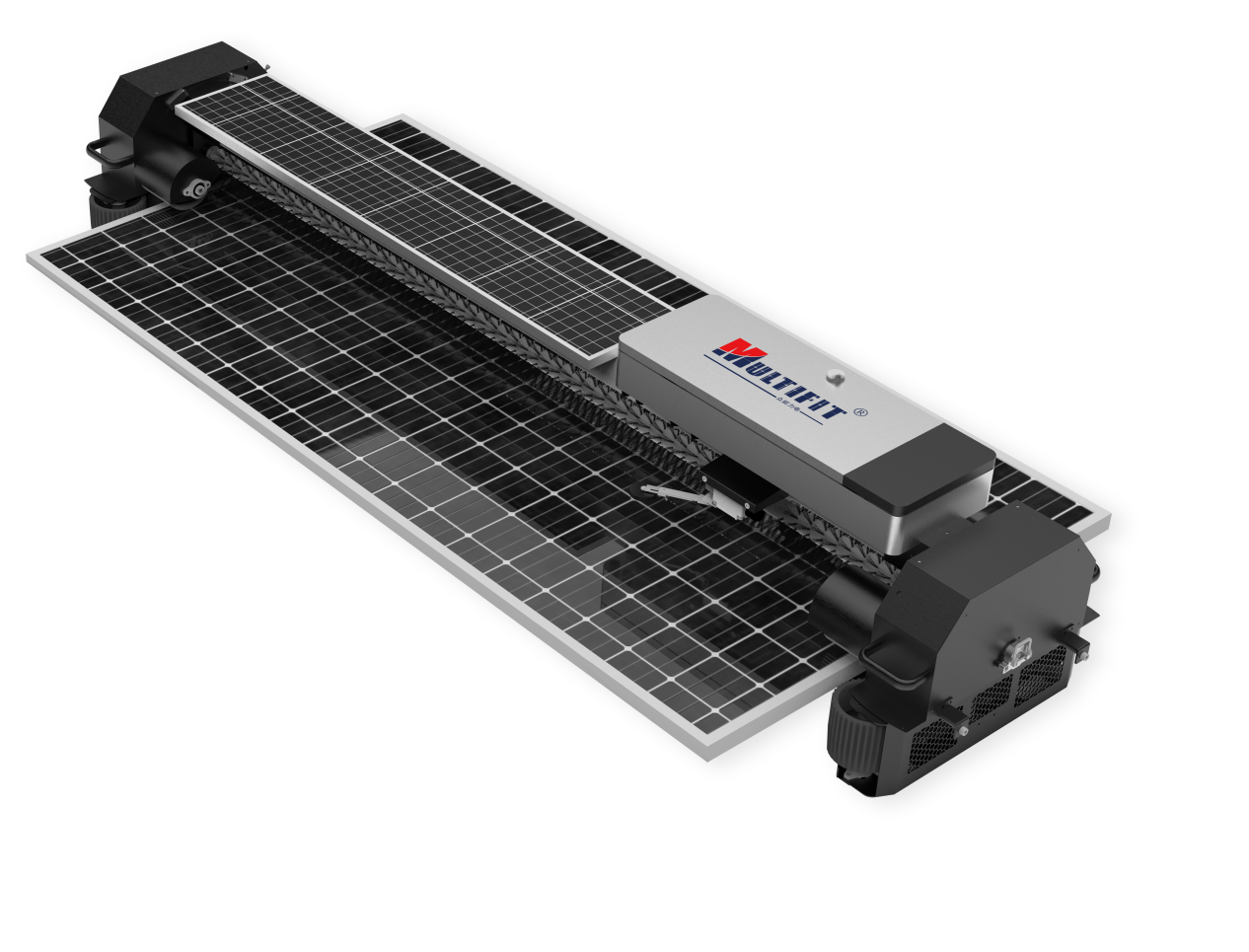
Compared to drone cleaning (priced at $1,000–$11,000 per unit), the MR-G model provides stable and reliable cleaning efficiency with lower equipment procurement and maintenance costs. Against the backdrop of AI technology driving the industry’s transformation towards “on-demand cleaning and intelligent decision-making,” the MR-G model is currently a pragmatic choice that combines efficiency and cost advantages. With a short investment return cycle, it is particularly suitable for ground-based photovoltaic power plants that pursue refined operation and maintenance management.
Post time: May-12-2026