
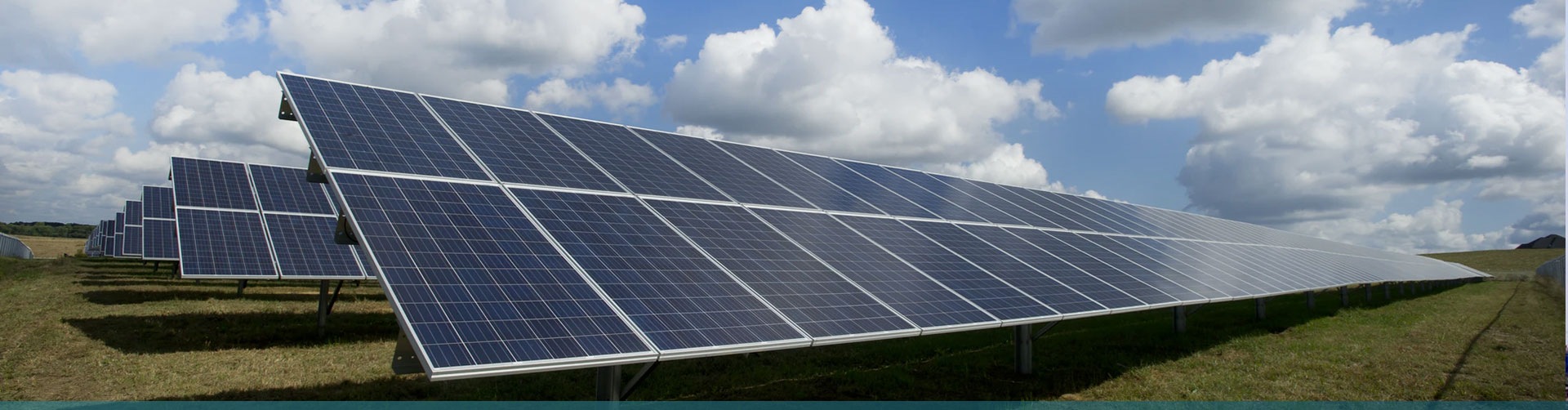
At the end of June 2026, the global photovoltaic industry is undergoing a dual transformation of deep adjustment and value restructuring.

Industry chain prices continue to face pressure, with overcapacity clouds lingering. By late June, PV industry chain prices extended their downward trend. Polysilicon inventory remained above 520,000 tons, with compound polysilicon prices dropping to 33 RMB/KG. The module segment came under severe pressure, with first-tier companies' quotes generally falling to 0.71-0.73 RMB/W, and some second- and third-tier players even breaking below the 0.7 RMB/W mark. Supply-side increments showed no sign of slowing—industry giants like Tongwei ramped up production significantly in June—while end-market demand continued to fall short of expectations. Supply-demand imbalance remains the fundamental driver of price suppression, and so-called "anti-involution" policies have failed to reverse the situation in the short term.

Two major exhibitions signal a shift: PV-storage integration and computing-power synergy emerge as new themes. At the early-June SNEC Shanghai Expo and the late-June European International Solar Exhibition in Munich, Germany, the industry's direction clearly pivoted. At SNEC, energy storage booths outnumbered traditional PV module displays for the first time, with "PV-storage integration" becoming a standard feature and "computing-power synergy" elevated as a strategic new topic on core exhibition stages. Zhu Gongshan, Chairman of the Global Green Energy Council, pointed out that the industry is embracing two paradigm revolutions—the first being the AI-energy symbiosis transformation of computing-power synergy, and the second being the expansion of space-based energy.

At the European Solar Exhibition, approximately 770 Chinese companies participated, demonstrating a collective shift from single-product offerings to integrated solution providers. LONGi Green Energy launched its "Full-Stack LONGi ONE" PV-storage integrated solution; CATL unveiled the "Tianheng" sodium-ion energy storage system (with a cycle life of 15,000 cycles and low-temperature capacity retention exceeding 92%); and Envision Energy released its new-generation 4.X MWh long-duration energy storage system.
Dual signals from policy and market suggest an industry turning point may not be far off. On June 25, the National Development and Reform Commission and the National Energy Administration issued the "15th Five-Year Plan for New Energy System Construction," setting a target to preliminarily establish a new energy system by 2030, with non-fossil energy consumption reaching 25% of the total. By the end of May, the national solar power installed capacity reached 1.26 billion kilowatts, up 16.3% year-on-year. A CICC research report judged that the photovoltaic industry's price bottom has largely been confirmed, with module manufacturers expected to see profit recovery in the third quarter.

From price involution to value reshaping, the PV industry is navigating through the cycle's uncertainties and advancing toward a new phase of system coordination and technological deepening.

Amid this industry transformation, Multifit Solar has demonstrated the power of technological innovation to transcend cycles through solid independent R&D capabilities. Since its establishment in 2009, the company has remained focused on technological breakthroughs in solar power generation and PV cleaning and maintenance. It has cultivated an experienced independent R&D team, continuously iterating and advancing on core products such as inverters and intelligent cleaning robots. Leveraging its robust technological strength, the company's products have been exported in bulk to over 50 countries and regions worldwide, including France, the UK, Italy, and Australia, bringing "Intelligent Made in China" to global markets and enabling more people to access green energy.
Post time: Jun-29-2026