
China — MULTIFIT, Solar Panel Cleaning Robot Manufacturer — www.vmaxpowerpv.com
For decades, PV plant cleaning has depended on manual crews. That model is now being replaced by the fixed solar panel cleaning robot — and the reason is not novelty, but arithmetic. Robots turn cleaning from a “pay-per-wash, schedule-per-crew” service into a “deploy once, run automatically” asset. Below, the numbers make the case across three dimensions: time, labor and money.
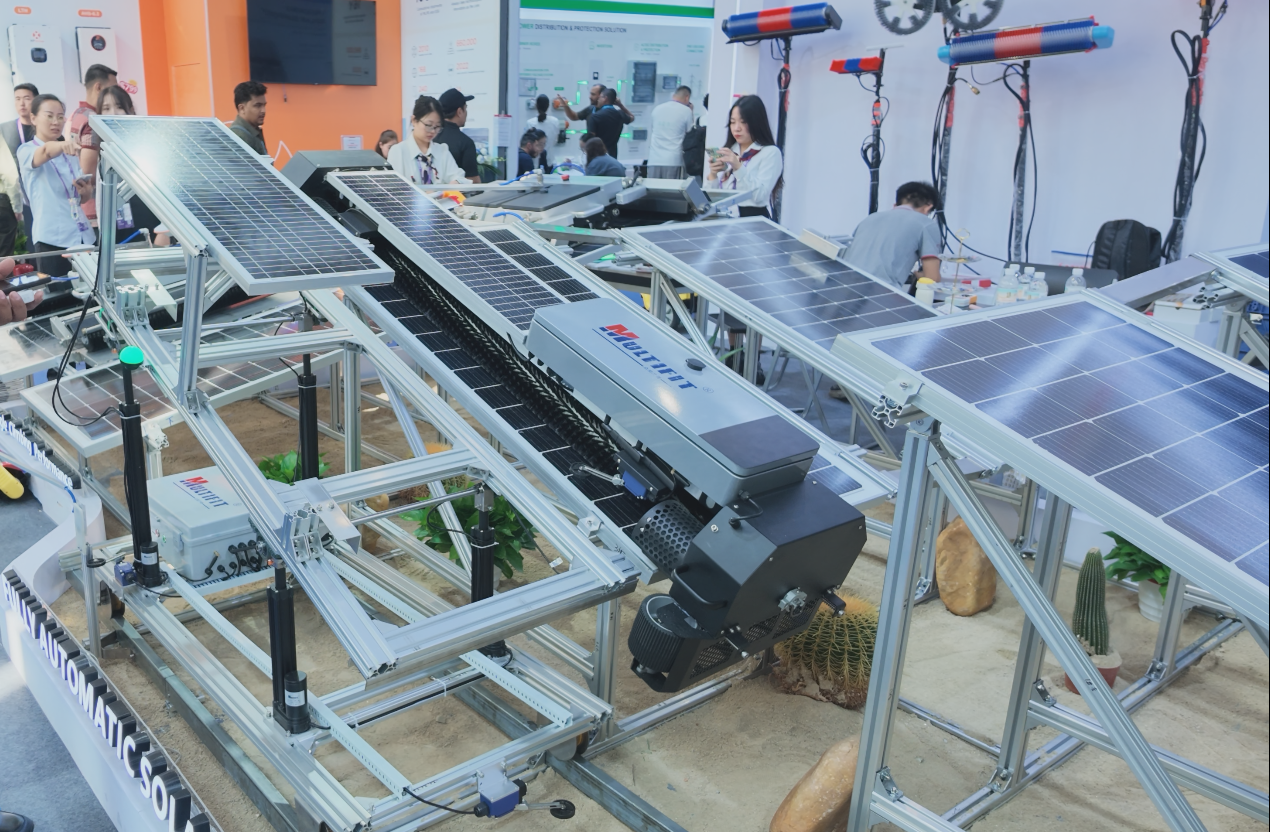
MULTIFIT fixed cleaning robot on a ground-mounted array in an arid, dusty region — waterless dry brushing, no crew required
Saving Time: Daily Sweeps That Manual Crews Can’t Match
Manual cleaning is constrained by crew scheduling, weather windows and site coordination, so cleaning frequency is usually the first thing to be cut. A fixed cleaning robot, mounted directly on the modules, can be scheduled to sweep daily or every other day — turning the “periodic deep clean” into routine maintenance.
The empirical evidence is strong. After a 50MW PV plant in Shandong, China deployed robots on a once-daily cleaning schedule, annual power generation rose by an average of 10.78%. MULTIFIT’s dry-cleaning robots, in multi-day continuous tests, autonomously completed the full cycle of timed cleaning, returning to dock to recharge, and data transmission — with no personnel on site at any point. Manual crews in arid regions, even at 6 to 8 washes per year, must organize teams, vehicles and water for every visit; the robot simply charges and stays on standby. The frequency gap translates directly into a generation gap: the “daily sweep” that manual cleaning cannot achieve, robots execute reliably.
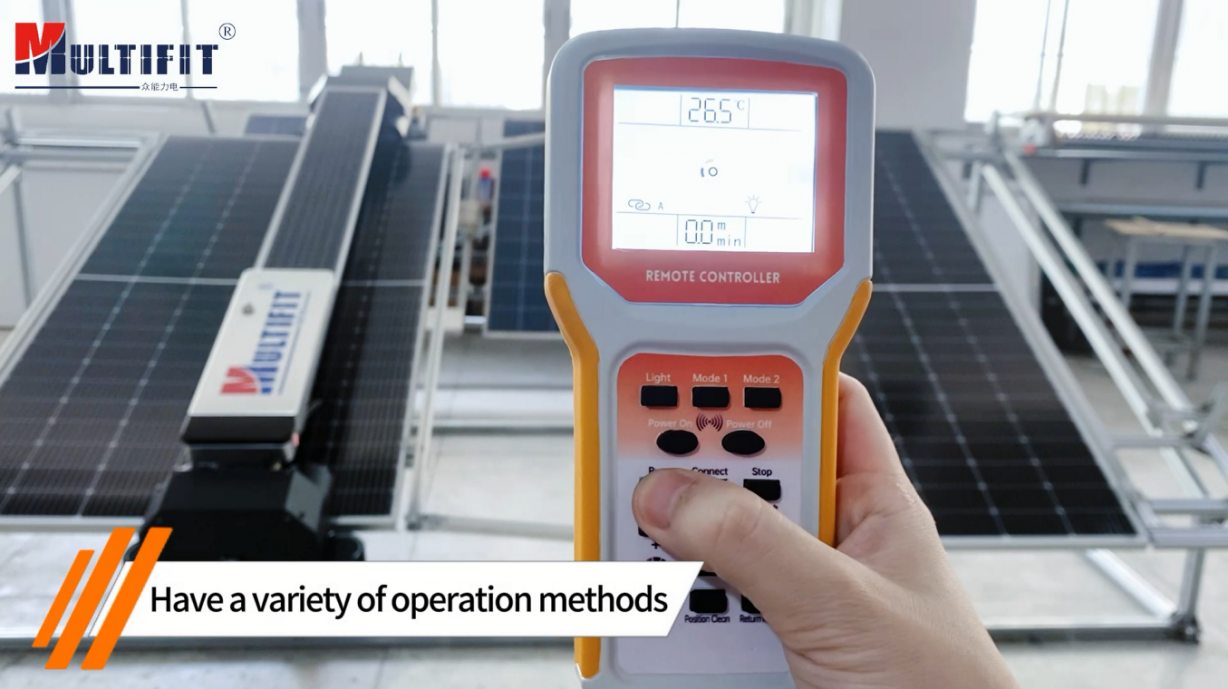
Multiple operation modes: remote control, scheduled autonomy and app connection — one operator supervises instead of ten workers scrubbing
Saving Labor: Taking People Off Roofs and Out of Repetitive Toil
Rooftop distributed PV makes the safety case clearest. Manual cleaning puts workers on sloped roofs, where fall risk is high — and the more often you clean, the longer the exposure. Fixed robots run automatically on the modules, so no one needs to climb. On ground-mounted plants, manual cleaning means hauling hoses, operating high-pressure water guns or driving water trucks: a 10-person crew’s daily transport and accommodation alone can exceed USD 1,000–2,000.
MULTIFIT explicitly frames the value of its dry-cleaning robots as “reducing the need to deploy personnel across vast site areas” while “minimizing risks associated with maintenance operations.” The robot turns “people doing the work” into “people managing equipment” — a qualitative change in labor intensity, not just a quantitative one.
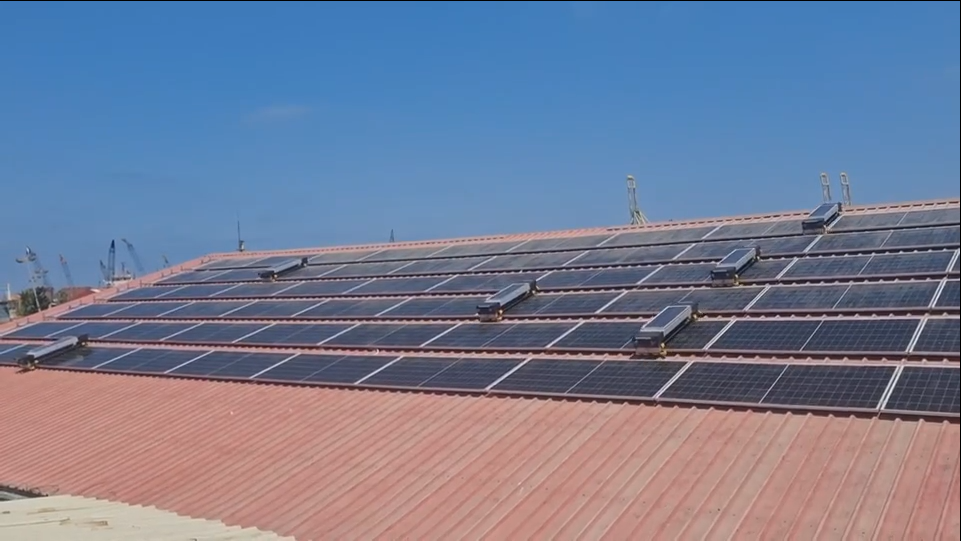
Rooftop distributed PV with MULTIFIT fixed robots installed — cleaning runs daily, and no worker ever climbs the roof
Saving Money: Full-Lifecycle Economics, Not Per-Wash Pricing
On upfront cost alone, a robot costs more than a single manual wash. Over the full lifecycle, the economics come from three sources:
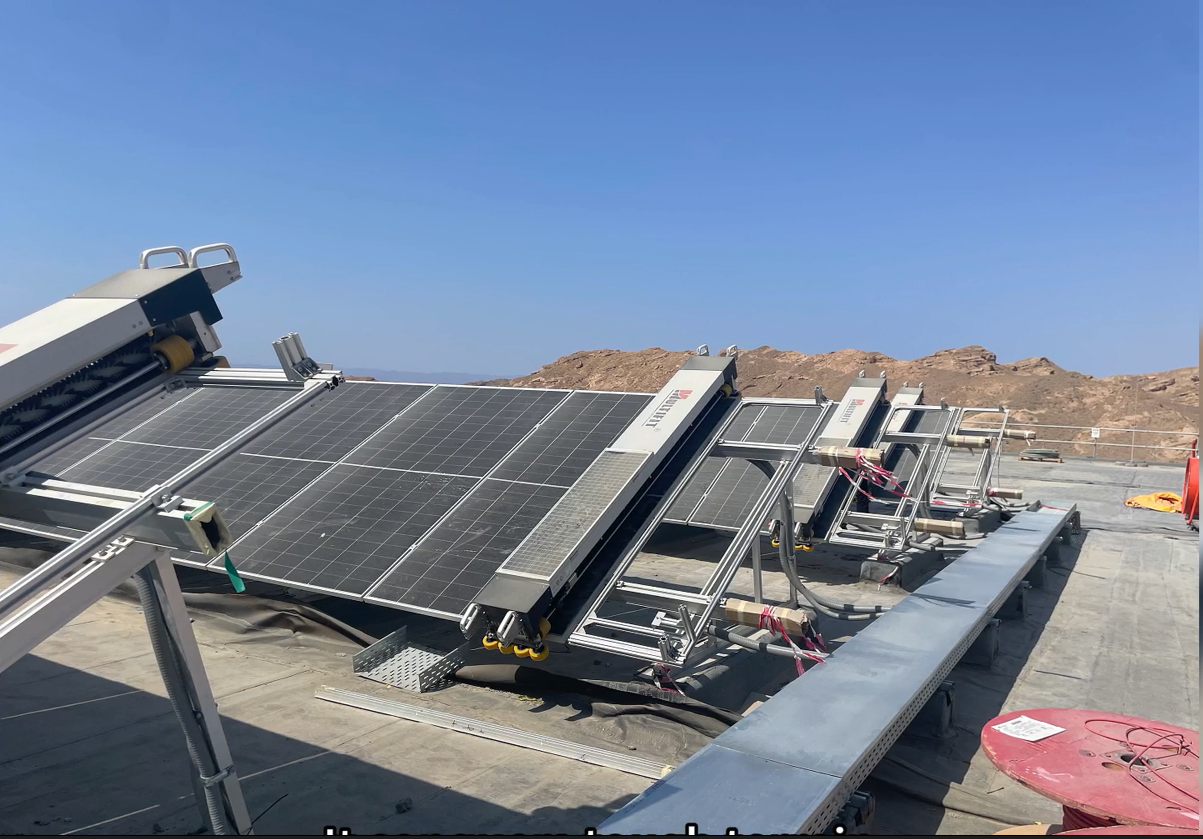
A fleet of fixed robots deployed across a rooftop array — one deployment, continuous returns
Which Fixed Solar Panel Cleaning Robot to Choose: The MULTIFIT MR-G Series
For buyers comparing waterless solar panel cleaning solutions, MULTIFIT recommends the MR-G series dry-cleaning fixed robot — waterless, autonomous, high-efficiency and module-safe. It needs no water source, dry-brushing with soft brushes that suit water-scarce regions; it runs on a timed schedule and returns to its dock automatically, so no one ever climbs the roof; its cleaning efficiency exceeds 99.5%, effectively recovering generation losses while reducing scheduling and maintenance costs. The full product line is open for inquiry at www.vmaxpowerpv.com/solar-panel-cleaning-equipment.
Frequently Asked Questions
How much does a solar panel cleaning robot improve power generation?
Field data: a 50MW plant with daily robot cleaning gained 10.78% annually; a 5.324MW rooftop study reported 21.2% generation uplift and a 1–2 year payback; MULTIFIT’s own tests show a conservative 4.7%–5.4% gain.
Do solar panel cleaning robots need water?
Not the MULTIFIT MR-G series. It cleans dry with soft brushes, eliminating water purchase, hauling and disposal costs — a 10MW plant saves an estimated 2,000 tons of water per year.
How fast does a fixed PV cleaning robot pay for itself?
Documented cases recover the initial investment in 1–2 years through higher generation revenue plus eliminated crew and water costs, with the advantage widening as labor costs rise.
Post time: Nov-27-2026