
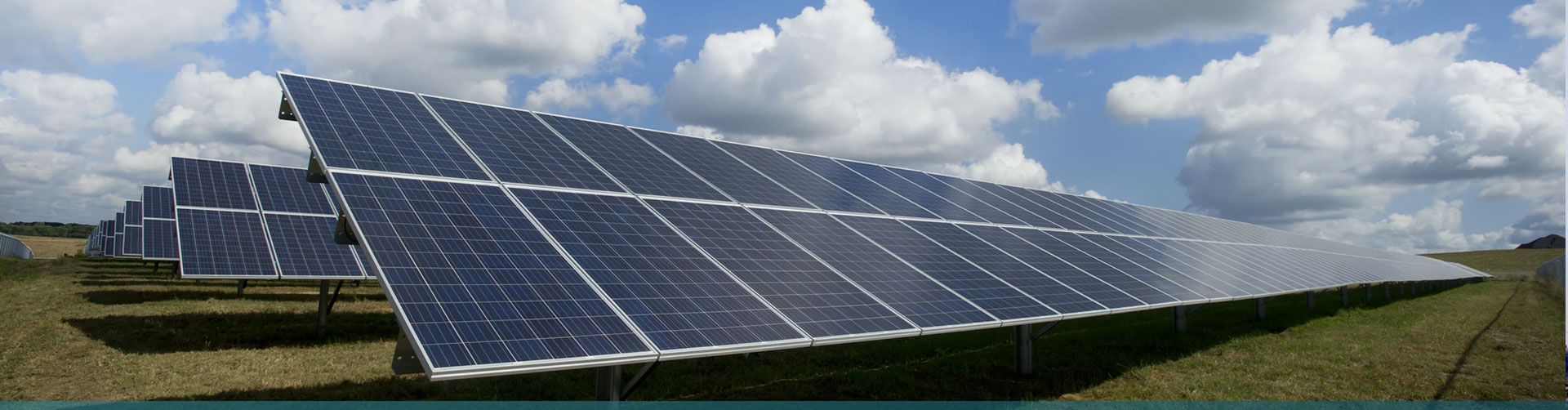
In mid-October 2026, Xinhua News Agency and Gansu Daily reported on a PV O&M site in northwest China: at the Jiudongtan Solar Power Station in Wuwei, Gansu, nine ground-traveling PV cleaning robots were deployed for trial operation. Dual-wheel four-legged units with 360° steering and oversized top-mounted roller brushes travel flush along the panel surface at 0.5 m/s, autonomously measuring distance, adjusting height, and sweeping. Pure-electric and powered by AI-vision algorithms, the robots independently identify obstacles and panel soiling levels. The operator’s field conclusion is decisive: after robotic cleaning, the PV modules’ photoelectric conversion efficiency increased by more than 10%, while O&M costs dropped, module safety was protected, and service life extended.

The Industry Implication
The industry implication runs far deeper than “another robot deployment.” China’s desert/Gobi (Shagehuang) mega-bases, the northwest arid belt, and drought regions across the Middle East, North Africa, and Australia face the same class of soiling — wind-blown dust, airborne sand, salt mist, bird droppings, and snow. Manual washing is prohibitively expensive in water-scarce areas, while fixed-schedule cleaning cannot keep up with dust resettling. Equipment that survives must meet four criteria: pure-electric self-power, dry cleaning, AI soiling detection, and mobility across complex terrain.

The industry is redefining “cleaning robots” as “desert generation-protection equipment”:
· Not “wash when it rains,” but “wash immediately after a sandstorm passes.”
· Not “blanket clean the whole array,” but “AI determines which rows are dirtiest and dispatches there first.”
· Not “blast with water,” but “brush sand away with roller/soft bristles without scratching the coating.”
· Not “single-unit remote control,” but “central dispatch, fleet coordination, and data feedback.”
Multifit: 17-Year Source Manufacturer Engineers “Desert-Durable” into the Product Core
In desert, Gobi, and overseas arid scenarios, Guangdong Multifit Photovoltaic Equipment Co., Ltd. (Multifit Solar / Beijing Multifit Power) — established 2009, National High-Tech Enterprise, Guangdong Provincial SRDI SME, Shantou Gazelle Enterprise, 60+ patents, CE/FCC/ISO certified, products in 100+ countries — does not compete on “booth specs.” Instead, Multifit builds equipment designed to keep running day after day through sandstorms:

- 01 MR-G3 Hanging-Type Waterless Robot: Self-powered, dry-brush cleaning, dust removal rate ≥99%. No water, no frozen lines, no AR-coating damage — directly addressing Jiudongtan-style “post-sandstorm resettling” conditions. Same logic for Middle East, Australia, Gansu, and Xinjiang.
- 02 MR-T1 AI Path-Following Robot: Cloud-based swarm scheduling, 50mm obstacle crossing, automatic posture correction. Receives central-dispatch orders — “soiling level → dispatch → pre/post generation curve feedback” — aligned with the Jiudongtan field’s “AI-vision soiling detection” approach.
- 03 MULR Series Soft-Bristle Dual-Mode Brushes (Shore A 80–90): Protect the coating even under sandy abrasion. Adapts to fixed mounts, tracking systems, BIPV, fish-solar hybrids, and flexible supports at wastewater plants.
- 04 Desert Adaptability: Breakpoint resume, intelligent deviation correction, auto-recharge, IP65 dust resistance — fully self-developed on Multifit’s 17-year electrical engineering foundation, with zero reliance on third-party robot suppliers.
- 05 Cloud Platform Traceability: Every cleaning session — zone, duration, dust removal rate, pre/post generation comparison — is recorded and auditable, letting plant owners turn “sand recedes, generation returns” into a verifiable yield statement.
While others market “how wide my machine sweeps,” Multifit asks: “Can you power on after a force-8 wind? Can it run dry without water? Are the brushes still intact after three months of sand abrasion? Did conversion efficiency actually return that 10%?” In desert PV, the procurement language was never about looking good — it is about enduring.
Industry Insight:
From Q4 2026, the O&M formula for desert/arid-region PV becomes:
Generation = waterless cleaning frequency × AI soiling-detection accuracy × coating-safety margin × data auditability.
Robots that only sweep flat rooftops cannot enter Jiudongtan. Only manufacturers whose machines withstand sand, self-power, scale into fleets, and account for every kWh will capture mega-base and overseas arid-region orders.
About Multifit
A National High-Tech Enterprise and one-stop provider of PV cleaning robots, inverters, and energy storage solutions.
Mission: “High Efficiency and Energy Saving, Enabling More People to Enjoy Green Energy.”
Post time: Oct-26-2026